
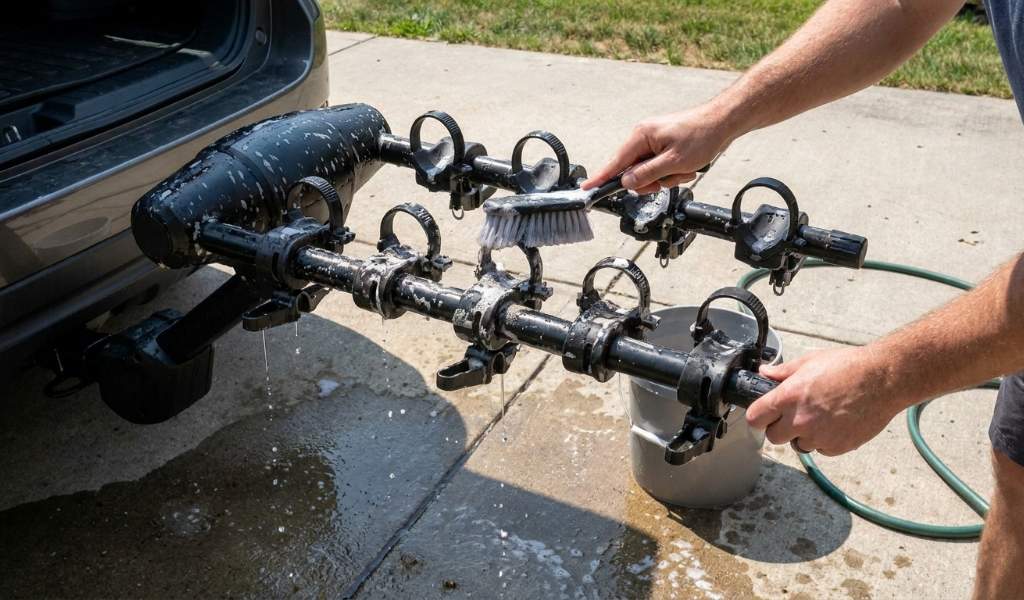
Keeping a Thule bike rack working well comes down to a few habits, rinsing off road salt and grime after dirty drives, checking straps and bolts every few months, lubricating locks and pivot points with a dry lubricant, and storing the rack indoors and dry when it’s not in use. Skipping these for too long is what leads to the most common failures, corroded joints, frayed straps, and locks that stick, rather than any defect in the rack itself.
Most issues also have a quick fix once caught early, rather than requiring a replacement part. This guide covers a cleaning routine, how to prevent corrosion, inspecting straps and bolts, keeping locks working smoothly, storage between trips, and a troubleshooting table for the problems that come up most.
Why Maintenance Matters
A bike rack lives outdoors, strapped to the back or roof of a car, exposed to rain, road salt, UV, and constant vibration. Left unchecked, that exposure leads to corrosion in moving joints, straps that fray and weaken, and locks that stick or stop turning.
None of this happens overnight, which is exactly why it’s easy to ignore until something fails, usually a stuck tilt lever or a strap that snaps mid-trip. A short seasonal routine catches these problems early, long before they turn into a safety issue or a reason to buy a new rack. This builds on the install and load basics in our complete Thule bike rack guide.
Cleaning Your Thule Bike Rack
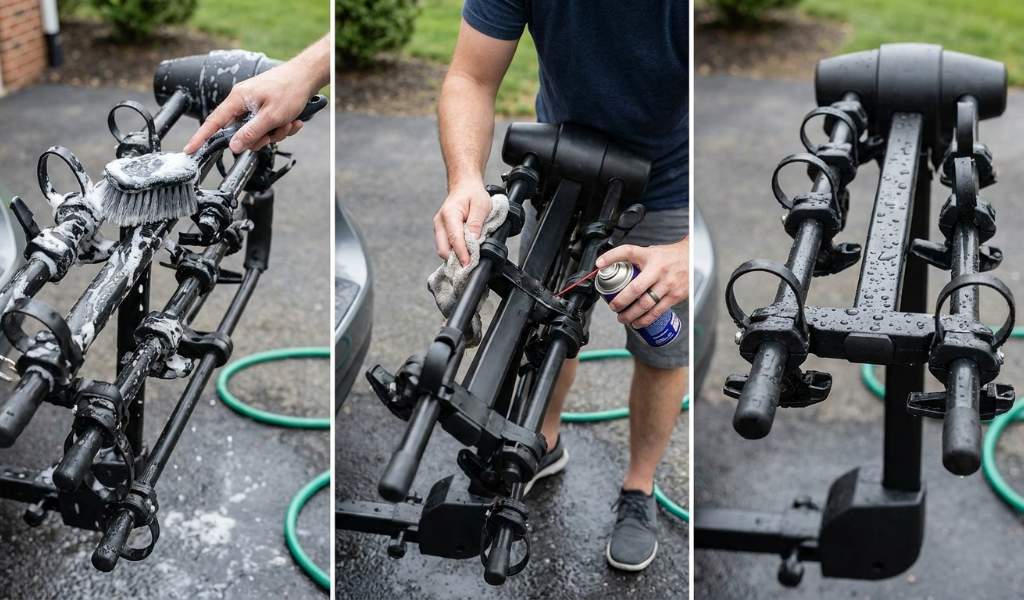
A quick rinse after any dirty, muddy, or salted drive keeps grime from working its way into joints and locks. For a deeper clean every month or so during regular use:
- Rinse the whole rack with a garden hose, paying extra attention to the underside and any folding joints.
- Wash with mild soap and water on a cloth or soft brush, avoiding harsh degreasers that can strip protective coatings.
- Rinse thoroughly afterward so no soap residue stays in crevices.
- Dry with a towel or let it air dry fully before folding it closed or storing it, since trapped moisture encourages rust.
Avoid pressure washers at close range, since the high-pressure spray can force water past seals and into locking mechanisms.
Preventing Corrosion
Road salt from winter driving is the single biggest cause of corrosion on a bike rack’s metal parts. A few habits slow it down significantly:
- Rinse off salt as soon as possible after driving on treated roads, rather than waiting for a routine wash.
- Apply a light coat of corrosion-inhibiting spray or silicone lubricant to exposed metal joints and fasteners a couple of times a year.
- Check for small paint chips or scratches on steel components and touch them up, since exposed bare metal rusts fastest.
- Keep the rack dry when stored, since trapped moisture against metal accelerates rust even indoors.
Aluminum components resist rust better than steel but can still corrode where dissimilar metals touch, so the same rinse-and-dry routine helps regardless of the rack’s materials.
Inspecting Straps and Bolts
Straps and bolts are the parts most likely to fail from everyday wear, and they’re worth checking more often than the rest of the rack. Aim for a quick check every few months of regular use, and always before a long trip:
- Look over every strap for fraying, cracking, or stiffness, especially near buckles where stress concentrates.
- Check that buckles close firmly and hold tension without slipping.
- Confirm all bolts, knobs, and the anti-rattle adjustment are tight, since vibration loosens fasteners over time.
- Replace any strap showing visible wear before your next trip rather than waiting for it to fail.
Most Thule dealers sell replacement straps for specific rack models, so a worn strap doesn’t mean replacing the whole rack.
Checking and Maintaining Locks
Locking cores are small, precise mechanisms, and they’re often the first part of a rack to act up after neglect. Grit and old lubricant buildup inside the keyhole are the usual culprits behind a lock that sticks or won’t turn.
A simple upkeep routine:
- Blow out the keyhole with compressed air occasionally to clear dust and grit before it builds up.
- Use a dry lubricant made for locks, such as graphite or a PTFE-based spray, rather than regular oil, which attracts more dirt over time.
- Test the key turns smoothly in dry conditions, not just when it’s raining or freshly rinsed.
- Keep a spare key somewhere separate from the one you carry daily, in case it’s lost or breaks off in the lock.
See our full Thule bike rack lock guide for how to layer rack locks with cable locks for the bikes themselves.
Storage Between Uses
How a rack is stored between trips affects how fast it wears out. Indoor storage, a garage, shed, or closet, protects against UV damage, temperature swings, and the kind of prolonged moisture exposure that leads to rust.
If indoor storage isn’t an option:
- Use a cover made for the rack or a general-purpose tarp to block direct sun and rain when it’s not in use.
- Fold the rack into its compact storage position if it has one, which also reduces strain on joints left extended for long periods.
- Avoid storing it somewhere it will sit in standing water or snow.
A rack that’s folded, dry, and out of direct sun when not in use will typically outlast one left mounted and exposed year-round.
Troubleshooting Common Issues
| Issue | Likely cause | Quick fix |
| Rack wobbles on the hitch | Worn pin or loose anti-rattle bolt | Tighten the bolt; replace a worn pin |
| Lock sticks or won’t turn | Grit or old lubricant in the core | Clean with compressed air, use dry lubricant |
| Rack won’t fold or tilt | Grime buildup on the pivot | Clean and apply silicone spray to the joint |
| Rust spots appearing | Chipped paint or trapped moisture | Touch up paint; dry fully before storage |
| Straps feel stiff or cracked | UV exposure and age | Replace the strap; store out of direct sun |
| Key won’t turn smoothly | Worn or dirty keyhole | Lubricate with a dry lock lubricant; try the spare key |
For anything specific to the bikes being lifted or stolen rather than the rack’s mechanics, see our security and lock guide.
Frequently Asked Questions
How often should I clean my Thule bike rack?
Rinse after any dirty or salted drive, and do a deeper soap-and-water wash about once a month during regular use.
What causes a hitch rack to wobble over time?
Usually a worn hitch pin or a loosened anti-rattle bolt. Tightening the bolt or replacing the pin typically solves it.
Can I use regular oil on a sticky lock?
It’s better to use a dry lubricant like graphite or PTFE spray, since regular oil attracts dirt and grit, which makes sticking worse over time.
Should I store my rack indoors?
Yes, if possible. Indoor storage protects against UV, rust, and the moisture exposure that wears straps and metal down faster.
How do I know if a strap needs replacing?
Look for fraying, cracking, or stiffness, especially near the buckle. Replace it before your next trip rather than waiting for it to fail.