

Cruiser bike size starts with your inseam, then match that number to frame size. Choose a frame that leaves comfortable standover clearance and lets your feet reach the ground easily. Finally, adjust saddle height and handlebar position until your posture feels upright and relaxed.
Start with simple tools, such as a tape measure, a hardcover book, and a flat wall. Stand barefoot against the wall, then place the book firmly between your legs like a saddle. Next, measure from the top of the book straight down to the floor for your inseam.
Also, note your height, arm length, and riding style before you compare any size chart. Together, these numbers reveal far more than height alone ever could.
Cruiser Bike Size Body Measurements First
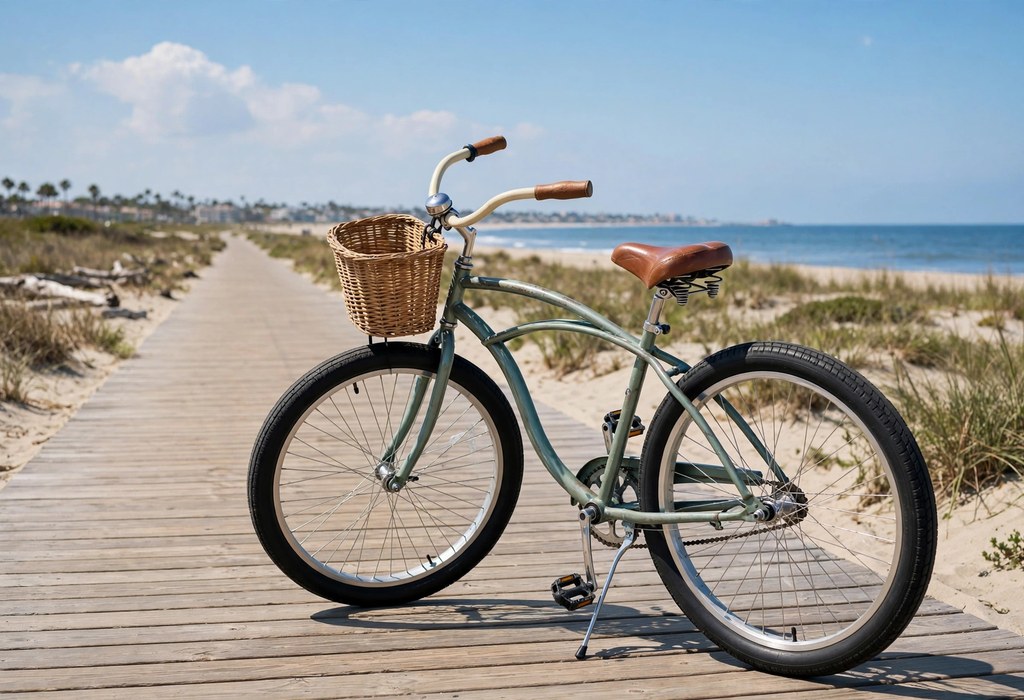
Begin your search with two numbers, namely your height and your inseam length. Your inseam guides fit more accurately than height alone on any beach cruiser bike. Therefore, record both numbers in inches and keep them handy while you shop.
Height offers a useful starting point, however inseam determines how the frame actually fits you. For example, two riders at the same height often need different frames because their leg lengths differ. Similarly, longer arms change your comfortable reach, so note arm length during this first check.
Consider your torso length as well, since it affects reach to the handlebars. Meanwhile, think about flexibility and comfort, because a relaxed cruiser posture suits most leisure riders. Consequently, a slightly smaller frame often feels easier to mount and control than an oversized frame.
Match Frame Size to Your Height and Inseam
Treat your inseam as the primary guide, then check height as a secondary cross-check. Makers measure cruiser frames by seat tube length, from the bottom bracket to the seat tube top. Smaller frames suit shorter inseams, while taller riders generally need longer seat tubes for proper extension.
As a general guide, shorter adults often ride 15-inch frames comfortably on flat boardwalk paths. Average-height adults often choose 17-inch or 18-inch frames for balanced reach and leg extension. Taller adults often prefer 19-inch frames or extended frames, especially for longer leisure rides.
Remember that brands size frames differently, so always compare the specific model chart before deciding. In addition, check the minimum and maximum seat post range, because a short post limits taller riders. Above all, favor fit over appearance, since a frame brings little joy when it hurts to ride.
Cruiser Bike Size Wheel Size And Standover Clearance
Wheel size shapes ride height, stability, and handling, so treat it as a fit factor, not decoration. Compact wheels lower the whole bike, while larger wheels roll more smoothly over boardwalk seams and paths. Most adult cruisers use 26-inch wheels, and shorter adults sometimes prefer 24-inch wheels for easier handling.
Broadly speaking, 20-inch wheels suit younger riders, while 24-inch wheels suit smaller adults. Then, 26-inch wheels suit most adults, and 29-inch wheels suit taller riders seeking extra stability. However, wheel size alone never guarantees fit, so combine it with frame size and standover clearance.
Check standover clearance by standing flat-footed over the top tube with both feet on the ground. Riders seeking easy mounting often choose step through beach cruiser bikes with a low frame opening. Aim for roughly one to two inches of clearance between your body and the top tube.
Cruiser Bike Size Saddle Height And Handlebar Position
Correct saddle height transforms pedaling comfort, so adjust it carefully after you choose a frame. Set the saddle so your knee keeps a slight bend at the lowest pedal position. Keep the saddle level or tilted slightly downward for maximum comfort on longer rides.
Set Your Saddle Height
Raise the saddle gradually, then pedal slowly and notice how your knees feel through each stroke. If your hips rock side to side, lower the saddle slightly until your pedaling motion feels smooth. When your knees rise too high, raise the saddle slightly until your legs extend more naturally.
Adjust Your Handlebars for an Upright Posture
Angle swept-back handlebars so your arms keep a slight bend and your shoulders stay relaxed. Lift the handlebars gradually until your back feels straight and your wrists feel free from strain. Avoid stretching forward, because cruisers reward an upright posture with easier breathing and better visibility.
Cruiser Bike Size Fit Test Before You Commit
Whenever possible, test ride the exact model, since charts guide you but only riding confirms comfort. Ride slowly in a safe area, then practice turns, stops, and starts at a relaxed pace. Notice whether braking feels easy, steering feels stable, and mounting feels natural from a standstill.
Test the bike on surfaces similar to your usual routes, such as boardwalks and park paths. During that ride, compare how single speed vs geared beach cruiser bikes handle gentle inclines and headwinds. Add gears only if your routes include hills, because flat cruising rarely needs extra gearing.
Cruiser Bike Size Mistakes To Avoid
Many buyers choose size from height alone, yet inseam, torso length, and flexibility all shape fit. Others prioritize style over comfort, then ride less often because the bike causes aches. Put comfort first as the deciding factor, and let style follow after fit feels right.
- Only height: Relying on height alone ignores inseam differences and often leads to poor fit.
- Skipping test rides: Skipping a test ride hides reach problems, braking discomfort, and handling surprises.
- Ignoring standover clearance: Ignoring standover clearance creates awkward mounts and reduces rider confidence.
- Oversized frames: Choosing an oversized frame forces awkward stretching and reduces control at slow speeds.
- Settling quickly: Settling quickly prevents small saddle and handlebar adjustments that transform comfort.
Fix these mistakes early, because small adjustments often solve problems that seem like wrong sizing. Adjust the saddle first, then adjust the handlebars, and finally recheck standover clearance again. Try a different frame size when problems persist after adjustments, rather than forcing an uncomfortable fit.
Frequently Asked Questions
What Size Beach Cruiser Bike Do I Need?
Match your inseam to frame size, wheel size, and standover clearance for the best fit.
Is a 26-Inch Beach Cruiser Right for Me?
A 26-inch cruiser suits most adults, although shorter riders sometimes prefer 24-inch wheels instead.
How Do I Measure My Inseam for a Beach Cruiser?
Place a book between your legs, stand barefoot against a wall, and measure down to the floor.
What Standover Clearance Should a Beach Cruiser Have?
Leave one to two inches of clearance over the top tube, except on step-through frames.
Can I Adjust a Beach Cruiser That Feels Slightly Too Big?
Lower the saddle slightly, raise the handlebars, and shorten reach until the fit feels comfortable.
Conclusion
Use your inseam first, compare frame and wheel sizes, and test ride whenever possible. After that, fine-tune saddle height and handlebar position until every ride feels relaxed and effortless. Visit a local shop today, test your top choices, and choose the cruiser that fits best.
Cruiser bike size affects comfort, balance, and control on every ride. Check cruiser bike size charts before ordering a frame online. A proper cruiser bike size prevents knee pain and back strain.