
A Thule roof bike rack clamps onto your car’s crossbars and carries bikes overhead, by the frame, the wheels, or the fork, making it the right choice for vehicles that don’t have a trailer hitch. It keeps the back of the car completely clear for a trunk, tailgate, or trailer in use, and it can share the roof with a cargo box or kayak carrier.
The trade-offs are the lift needed to load a bike above your head, a small hit to fuel economy from wind drag, and the real risk of forgetting the added height at a garage or drive-through. This guide walks through matching the rack to your crossbar type, installing it step by step, lifting and securing bikes safely, the height clearances to watch for, and driving precautions once it’s loaded.
What Is a Thule Roof Bike Rack?
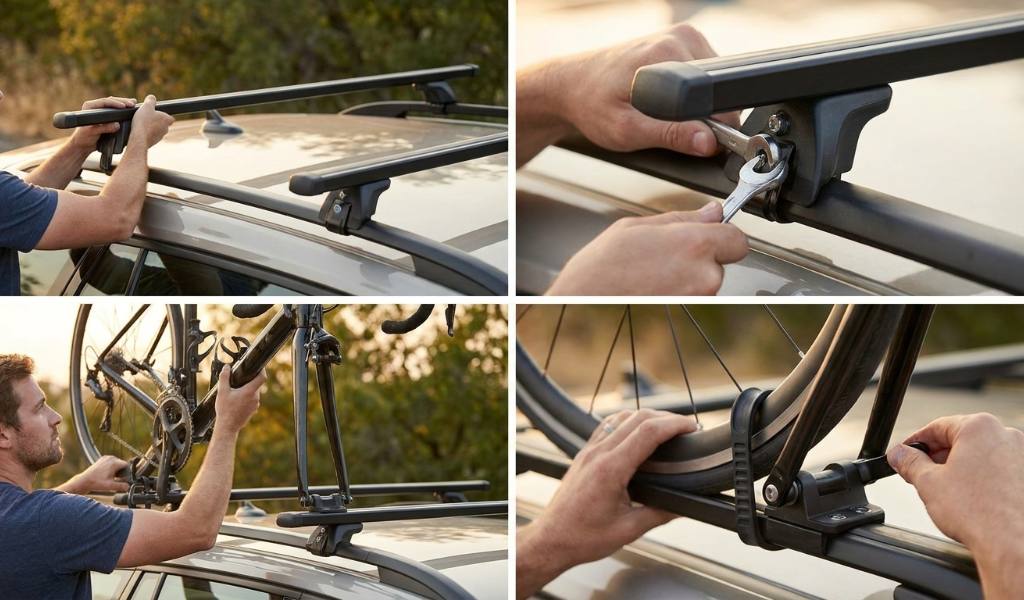
A roof-mounted Thule rack clamps onto crossbars and carries bikes overhead, either gripping the frame, holding both wheels in a tray, or clamping the front fork with the front wheel removed. It’s the go-to option for vehicles without a hitch, and it keeps the rear of the car completely clear for a trunk, tailgate, or trailer hitch doing other work.
The trade-offs are the lift needed to get a bike up top, a small hit to fuel economy from wind drag, and the need to remember the extra height every time you pull into a garage or drive-through. For how roof racks compare to hitch and trunk options, see our complete Thule bike rack guide.
Roof Bar and Mounting Compatibility
A roof bike rack needs crossbars to clamp onto, either factory-installed bars, an aftermarket set, or a track system built into the roofline. Thule racks generally use one of three mounting styles:
- Frame mount: clamps the bike’s top tube directly. Simple and quick, but not ideal for carbon frames or step-through bikes.
- Wheel mount (upright): holds both wheels in place while an arm secures the frame, works with almost any bike shape, including step-through and full-suspension.
- Fork mount: removes the front wheel and clamps the fork directly to the rack, which is the most stable option but requires taking the wheel off and on each time.
Before buying, confirm your crossbar shape (round, square, aero, or factory) against the rack’s listed compatibility, since the clamp mechanism differs by bar profile. No crossbars yet? Thule sells bar and foot kits matched to specific vehicles.
How to Install a Thule Roof Bike Rack
- Position the mount on the crossbar. Set it where recommended in the manual, usually with even spacing from the car’s center line if running two racks.
- Open the clamp and seat it on the bar. Make sure the clamp jaws fully wrap the crossbar profile before tightening.
- Tighten the clamp knob or lever until it’s firm and doesn’t shift when pushed by hand.
- Repeat for a second rack if carrying more than one bike, keeping consistent spacing between mounts.
- Attach any wheel trays, fork clamps, or frame arms that came with the rack, adjusting them to the bike size you’ll be carrying most often.
- Shake test each mount by hand before loading a bike, checking for any play against the crossbar.
Most installs take about 10 minutes per rack. Recheck the clamp tension after your first short drive, since new installs can settle slightly.
How to Load Bikes Onto a Roof Rack
Lifting a bike overhead is the trickiest part of using a roof rack, so a steady lifting technique matters more here than with hitch or trunk racks.
- Lift from the frame, not the wheels or handlebars, keeping the bike close to your body as you raise it.
- Rest the front wheel or fork into its tray or clamp first, then lower the rear wheel into place.
- Close and tighten the frame clamp or wheel straps fully before letting go of the bike.
- If using a fork mount, remove the front wheel first and clamp the fork directly, then strap the removed wheel into its own wheel-only mount.
- Load multiple bikes back to front if your roof has more than one rack, so you’re not reaching over an already-secured bike.
A second person helping to steady the bike while you tighten straps makes the job considerably easier, especially for taller vehicles.
Height Clearance and What to Watch For
A loaded roof rack adds anywhere from 2 to 4 feet to your vehicle’s total height, which is the single biggest safety issue with this rack type. The classic mistake is driving into a garage, carport, or drive-through at a height you’d normally clear without thinking twice.
A few habits make this easier to manage:
- Measure your loaded height once and write it down, or stick a note on the dashboard as a reminder.
- Get in the habit of glancing up before pulling into any covered space, even your own garage.
- Remove the bikes, or the whole rack, before entering a car wash or low parking structure.
- Watch for low tree branches on rural roads or driveways, not just structures.
A height clearance reminder sticker on the sun visor or dashboard is a cheap habit that prevents an expensive mistake.
Driving Precautions With a Loaded Roof Rack
A loaded roof rack changes how the car handles in a few small but real ways. Expect a noticeable increase in wind noise and a measurable drop in fuel economy, especially at highway speeds, since the bikes and rack sit directly in the airflow.
A few precautions worth keeping in mind:
- Drive a bit slower than usual on the highway; many manufacturers recommend staying under 70 to 80 mph with a loaded rack.
- Take corners and lane changes a little more gently, since the extra height raises the car’s center of gravity slightly.
- Avoid automatic car washes entirely with bikes or the rack still mounted.
- Recheck strap and clamp tension at a rest stop on longer trips, since vibration can loosen things over hours of driving.
For security once the rack and bikes are mounted, see our Thule bike rack lock guide.
Frequently Asked Questions
Do I need special crossbars for a Thule roof bike rack?
You need some form of crossbar or track system, either factory-installed or aftermarket. Check the rack’s listed compatibility against your bar shape before buying.
How many bikes can fit on a roof rack?
Most single units hold one bike. For more, you add additional crossbar-mounted racks spaced along the roof, up to what your crossbar weight rating allows.
Does a roof rack affect gas mileage?
Yes, noticeably more than a hitch or trunk rack, since the bikes sit directly in the wind. Removing the rack when not in use helps if fuel economy matters to you.
How do I avoid hitting a garage or carport?
Measure your loaded height once and keep a visible reminder, like a note on the dashboard, so you don’t forget the extra clearance needed.
Can I put a fat tire or step-through bike on a roof rack?
Yes, with a wheel-mount or upright-style rack rather than a frame-clamp design, which suits step-through frames and irregular shapes better.