
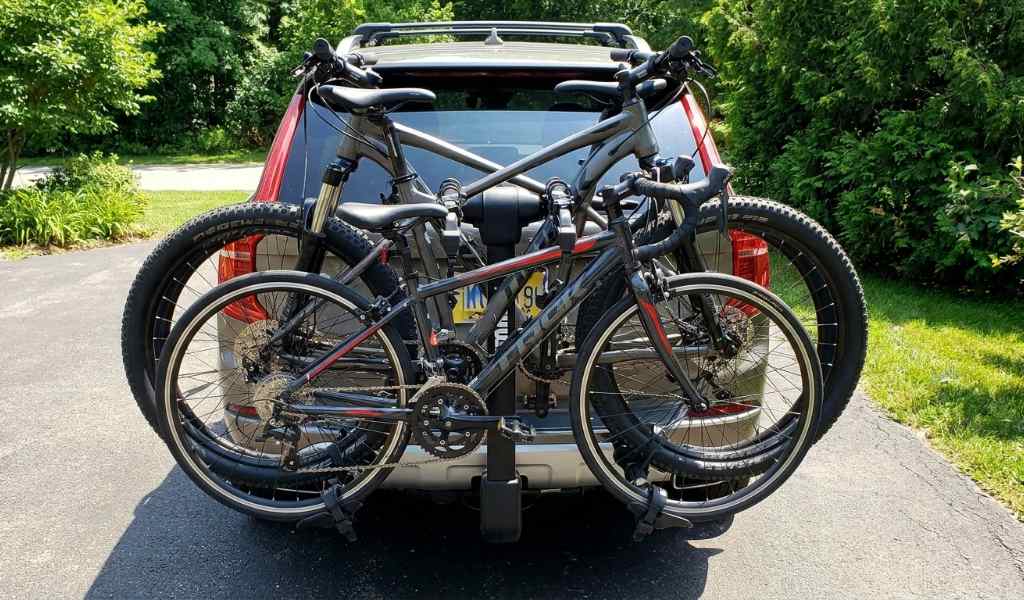
Carrying four bikes on one Thule rack takes a model specifically rated for that load, either a dedicated 4-bike platform rack or a smaller rack with an approved extension arm, not just four open slots on any rack. At this capacity, both the per-bike weight limit and the rack’s total weight rating matter, since four bikes near their individual limits can also push the rack close to its overall maximum.
Spacing also gets tighter, with handlebars and pedals more likely to collide, so loading order and clearance checks matter more than with two bikes. This guide covers the approved rack configurations for four bikes, the weight limits to watch, how to space bikes correctly, and a safe loading order that keeps the whole setup stable on the road.
What It Takes to Carry Four Bikes
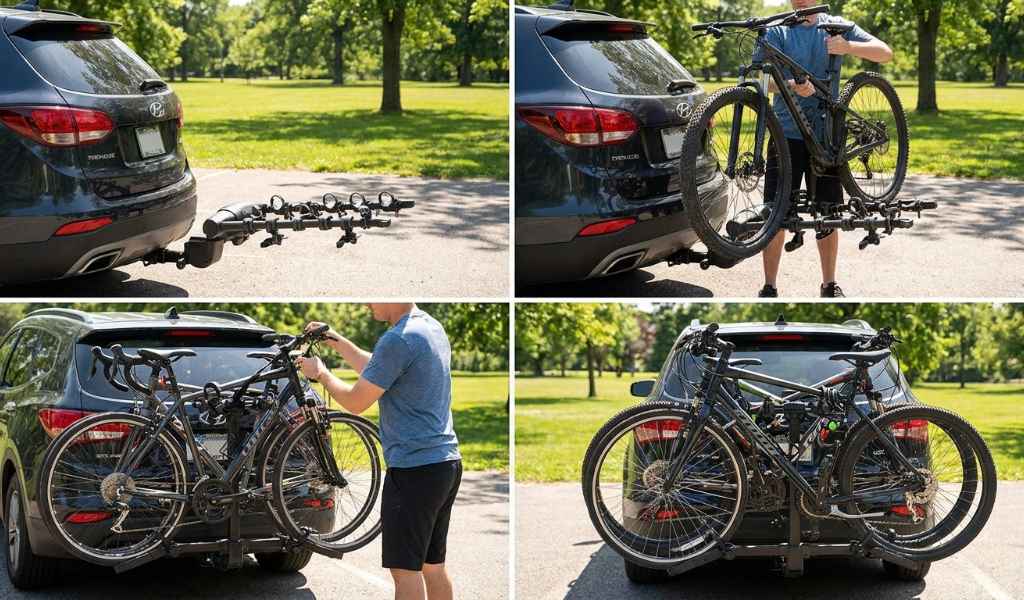
Most standard Thule racks are built for 2 or 3 bikes. Carrying four means stepping up to a model specifically rated and designed for that load, usually a platform-style hitch rack with four wheel trays, or a tray-style rack with an add-on extension arm.
Four bikes adds up fast in both length and weight. The rack sticks out further behind the car, the total weight on the hitch climbs, and spacing between bikes gets tighter, so loading and strapping technique matter more than at two bikes. For how four-bike racks compare to smaller setups, see our complete Thule bike rack guide.
Approved Rack Configurations for Four Bikes
There are two common ways Thule racks reach four-bike capacity:
- Dedicated 4-bike platform racks: built from the ground up with four wheel trays and rated for the full load, this is the most straightforward option if you regularly carry four bikes.
- Base rack plus an add-on extension: some 2-bike platform racks accept a bolt-on extension arm that adds one or two more trays, letting you scale up from a smaller rack you already own.
Only use an extension that’s explicitly approved for your base rack model, since an unapproved combination can exceed the hitch’s rated tongue weight or the base rack’s own structural limits. Check Thule’s compatibility listing for your specific rack before adding an extension.
Per-Bike Weight Limits at Four-Bike Capacity
A 4-bike rack lists both a per-bike weight limit and a total rack weight limit, and both matter at full capacity. A common spec is around 37.5 lb per bike with a total capacity near 150 lb, meaning four average bikes fit comfortably, but swapping even one for a heavier bike changes the math.
Add up the actual weight of all four bikes before loading, not just the bike count, since four bikes near the per-bike limit can also approach the rack’s total limit at the same time. If any of the four is an e-bike, check our e-bike rack guide first, since a single heavy e-bike can use up much of the rack’s total capacity on its own.
Spacing Bikes Correctly
With four bikes on one rack, handlebars and pedals have far less room to clear each other than with two. A few spacing habits prevent the most common collisions:
- Alternate handlebar direction on every adjacent pair, turning one left and the next right.
- Stagger seat height where possible, moving a taller bike’s seat forward or back relative to its neighbor.
- Check pedal clearance by spinning the cranks slightly after loading each bike, before moving to the next one.
- Use the rack’s spacer bars or arms at their widest practical setting if the rack allows adjustment.
Taking an extra minute to check clearance between each pair of bikes before driving prevents scraped paint and bent components on a long trip.
Safe Loading Order and Technique
Load from the rack’s innermost slot outward, putting the heaviest bike closest to the vehicle first. This keeps the load’s center of gravity as close to the car as possible and makes the rack more stable as you add each additional bike.
A practical loading order for four bikes:
- Load the heaviest bike into the slot nearest the hitch.
- Load the second-heaviest bike next, alternating its handlebar direction from the first.
- Add the third bike, checking pedal and wheel clearance against bike two.
- Load the lightest bike last, in the outermost slot.
- Tighten every strap and clamp across all four bikes, then do a full shake test on the loaded rack.
- Walk around the car and check that the rear lights, plate, and turn signals are still visible.
For locking all four bikes securely once loaded, see our Thule bike rack lock guide.
Frequently Asked Questions
Can I add a 2-bike rack extension to carry four bikes?
Only if Thule lists that extension as compatible with your specific base rack. An unapproved combination can exceed the rack’s rated capacity.
Do all four bikes need to weigh the same?
No, but the combined weight needs to stay under the rack’s total limit, and no single bike should exceed the per-bike limit.
Will a 4-bike rack fit a smaller car?
It depends on the hitch receiver size and the vehicle’s rated tongue weight, not the car’s size alone. Check both before buying.
How do I stop bikes from hitting each other at four-bike capacity?
Alternate handlebar direction, stagger seat heights where possible, and check pedal clearance between each pair after loading.
Is a 4-bike rack harder to install than a 2-bike rack?
Installation on the hitch itself is similar, but the rack is longer and heavier, so expect a bit more effort lifting it into the receiver.