
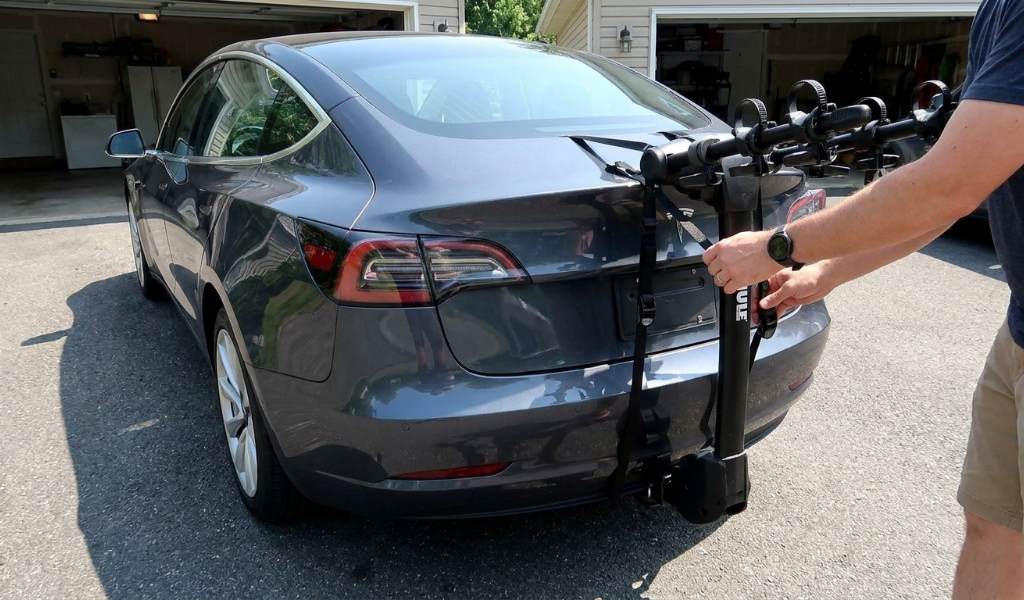
A Thule trunk bike rack straps onto your trunk lid, hatchback, or rear door using hooks and adjustable straps, carrying two to three bikes with no hitch or roof bars needed. It’s the most affordable and portable Thule rack, folding down small enough to store in a closet, which makes it a strong fit for occasional riders or anyone without a hitch who doesn’t want to add roof bars.
It relies more heavily on correct strap placement and tension than a hitch or roof rack, and it generally holds less weight per bike. This guide covers which vehicle shapes fit best, installing the rack step by step, where straps should and shouldn’t go, protecting your car’s paint, and the load limits worth respecting before you overload it.
What Is a Thule Trunk Bike Rack?
A trunk-mounted Thule rack straps onto the trunk lid, hatchback, or rear door using a set of hooks and adjustable straps, with no hitch or roof bars required. It’s the cheapest and most portable Thule rack category, folding down small enough to store in a closet or trunk when not in use.
It generally carries fewer bikes and has lower weight limits than a hitch rack, and it depends more on correct strap tension and placement to stay secure. It’s a strong fit if you want an affordable rack for occasional use, or if your car doesn’t have a hitch and you don’t want to add roof bars. See our complete Thule bike rack guide for how it stacks up against hitch and roof options.
Trunk and Hatchback Compatibility
Trunk racks work best on vehicles with a trunk lid or hatch that gives a solid, unbroken edge for the upper hooks to grip. Sedans and coupes with a standard trunk lid are usually the easiest fit. Hatchbacks and wagons also work well, though the rack sits more vertically and needs careful strap routing around the rear window.
A few vehicle features can complicate the fit:
- Spoilers: can block the upper hooks or force an awkward strap angle; check Thule’s fit list for your specific trim.
- Rear wipers: may need straps routed around or beside them rather than over them.
- Liftgate hinges: on some SUVs, exposed hinges can interfere with strap placement near the top of the hatch.
- Convertibles: generally not recommended for trunk racks, since the soft or power top often can’t support strap tension.
When in doubt, check Thule’s vehicle fit guide by make, model, and year before buying, since fit varies more for trunk racks than for hitch racks.
How to Install a Thule Trunk Bike Rack
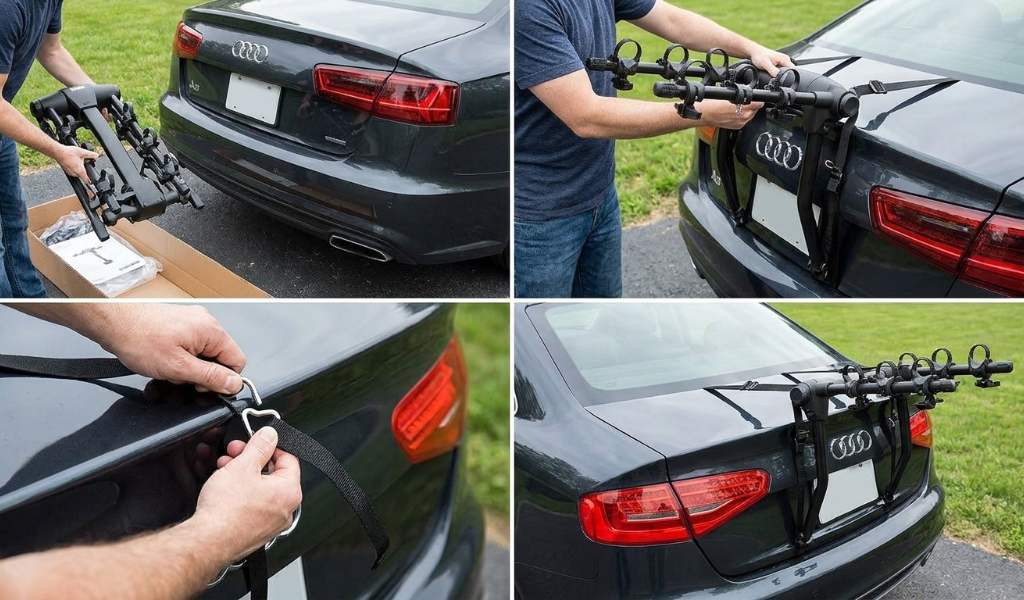
- Open the trunk or hatch partway. This gives room to hook the upper straps over the top edge before closing.
- Hook the upper arms over the trunk or hatch edge, centering the rack on the vehicle’s midline.
- Close the trunk or hatch gently onto the straps, checking they sit flat and aren’t pinched at an angle.
- Attach the lower straps to the hooks or anchor points below the bumper, pulling them snug but not overtightened.
- Tighten all straps evenly, going back over each one a second time since the first pass often leaves slack.
- Shake test the frame by hand, pushing side to side and up and down, before loading any bikes.
Most trunk racks install in under 10 minutes with no tools. Recheck strap tension after loading bikes and again after the first few minutes of driving.
Strap Placement and Installation Checks
Getting strap placement right is the single biggest factor in how securely a trunk rack holds. A few placement rules to follow:
- Route the upper straps over the trunk or hatch edge at points with a flat, solid surface underneath, avoiding seams or trim pieces that could crack under pressure.
- Keep the lower straps away from exhaust pipes, mufflers, or anything hot.
- Avoid routing any strap directly over a spoiler, antenna, or rear wiper arm.
- Check that straps run in a straight line to their anchor point rather than at a sharp angle, which can slip or wear faster.
Before driving, run a final check: open and close the trunk slightly to confirm nothing shifted, then do the shake test on the whole rack frame again with bikes loaded.
Protecting Your Car’s Paint
Most paint damage from trunk racks comes from either missing protective padding or dirt and grit trapped between the rack’s contact points and the car’s surface. A few habits prevent most of it:
- Wipe down the trunk or hatch contact points before installing the rack, so no grit gets ground into the paint under strap pressure.
- Make sure every factory-included foam pad or rubber bumper is in place before tightening straps.
- Check contact points periodically for wear, and replace foam pads once they compress flat or peel.
- Avoid over-tightening straps, since excess pressure increases the chance of marking the paint even with padding in place.
If a rack didn’t come with enough padding for your vehicle’s shape, add felt pads or pipe insulation at any bare metal contact point before your next trip.
Load Limits and What Not to Exceed
Trunk racks typically carry 2 to 3 bikes with a per-bike weight limit of around 29 to 35 lb, lower than hitch or roof racks. Exceeding either the per-bike or total rack weight limit puts extra strain on the straps and hooks, raising the risk of a strap slipping or a hook bending under load.
A few limits worth respecting:
- Don’t add a bike heavier than the rack’s stated per-bike limit, even if there’s a free slot. E-bikes in particular often exceed trunk rack ratings entirely; see our e-bike rack guide for better-suited options.
- Don’t exceed the total number of bikes the rack is rated for, even with lightweight bikes, since the straps are sized for that count.
- Check the total combined weight, not just bike count, since three lighter bikes can still add up close to the rack’s overall limit.
If you regularly carry more bikes or heavier bikes like e-bikes, a hitch rack is usually the better fit; see our full capacity comparison across all rack types.
Frequently Asked Questions
Will a trunk rack damage my car’s paint?
Not if installed correctly with the factory padding in place and clean contact points. Most damage comes from missing pads or grit trapped under a strap.
Does a trunk rack work on a hatchback?
Yes, most trunk racks fit hatchbacks and wagons, though straps need careful routing around the rear window and hinges.
How many bikes can a trunk rack carry?
Most models hold 2 to 3 bikes, with lower per-bike weight limits than hitch racks. See our full capacity breakdown for comparisons across rack types.
Can I use a trunk rack with a spoiler?
Sometimes, depending on the spoiler’s shape and position. Check Thule’s fit guide for your specific trim, since spoilers are one of the more common fit issues.
Is a trunk rack as secure as a hitch rack?
It can be, when straps are placed and tightened correctly, but it relies more heavily on strap tension than a hitch rack’s rigid mount, so periodic rechecking matters more.