
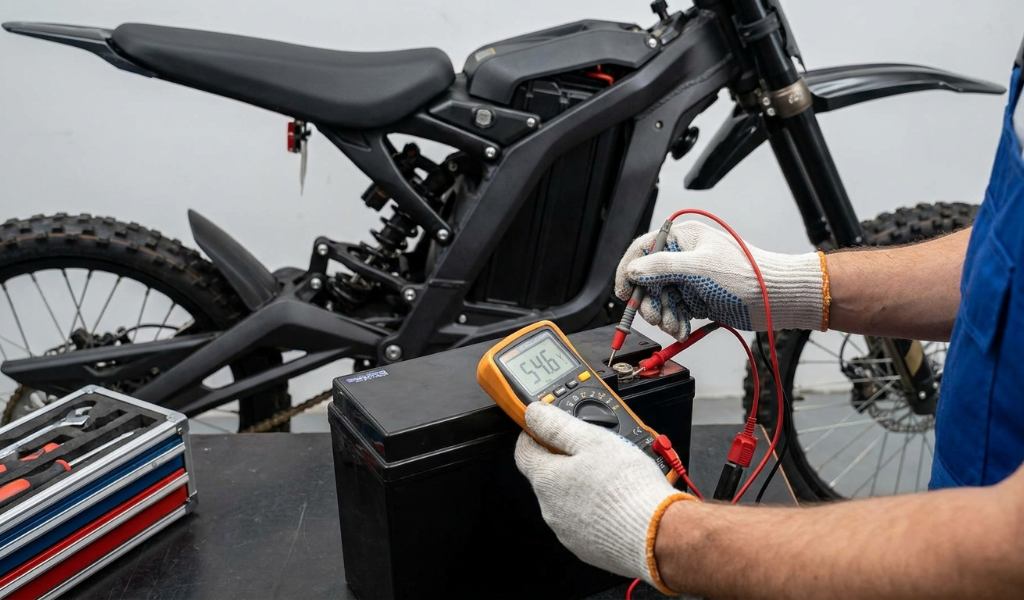
Electric dirt bikes get sold on the promise of low maintenance, and that promise mostly holds up. No oil changes, no carburetor cleaning, no valve adjustments. But low maintenance is not the same as no maintenance, and skipping basic care is the fastest way to shorten the life of your bike and your battery.
This guide covers the maintenance tasks that actually matter, how often to do them, and the small habits that keep an electric dirt bike running well for years instead of months.
Battery Care
The battery is the most expensive single part on your bike, and how you treat it day to day determines how long it lasts.
Keep the charge between roughly 20 and 80 percent for daily storage rather than constantly running it down to zero or leaving it topped off at 100 percent. Both extremes stress the cells and speed up capacity loss over time. If you are storing the bike for more than a few weeks, charge it to around 50 percent first rather than leaving it full or empty.
Avoid charging right after a hard ride while the battery is still hot. Let it cool down for 20 to 30 minutes first. Charging a hot battery generates more heat on top of heat, which degrades the cells faster than normal use alone.
Cold weather also affects battery health and usable range. Store the bike somewhere temperate when possible, and expect reduced range on cold rides regardless of how well you have cared for the battery otherwise.
Chain and Drivetrain
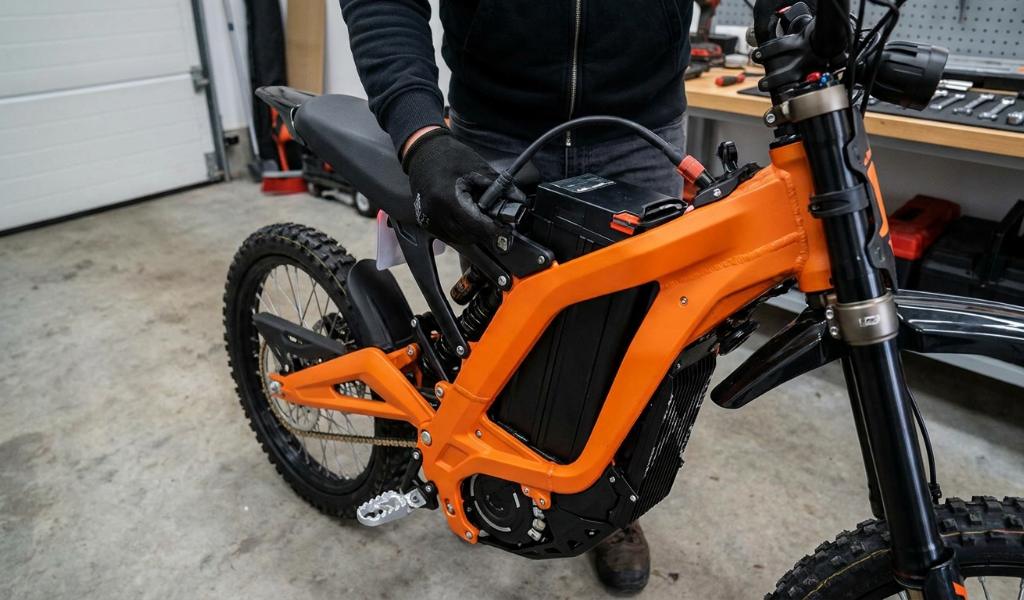
The chain is one of the few parts on an electric dirt bike that still behaves like it does on a gas bike, and it needs the same attention.
Check chain tension every few rides. A chain that is too loose can skip or derail under the instant torque electric motors deliver, and a chain that is too tight wears out your sprockets faster. Clean and lubricate the chain after muddy or dusty rides, since dirt buildup accelerates wear on both the chain and the sprockets.
If your bike uses a belt drive instead of a chain, like some Sur-Ron models, check the belt for cracking or fraying periodically. Belts generally need less frequent attention than chains but are more expensive to replace when they do wear out.
Brakes and Tires
Electric dirt bikes build speed quickly since there is no engine braking to slow you down the way there is on a gas bike. That makes brake maintenance more important, not less.
Check brake pad thickness regularly and replace pads before they wear down to the metal backing, which can damage your rotors. Bleed hydraulic brake lines if the lever starts feeling soft or spongy, since air in the line reduces stopping power when you need it most.
For tires, check pressure before every ride. Off-road tires run lower pressure than street tires, and the correct range depends on your bike and terrain, so check your owner’s manual rather than guessing. Inspect tread wear and sidewalls for cuts after rough trail rides, since punctures and sidewall damage are common on technical terrain.
Electrical Connectors and Water Protection
This is the part of electric dirt bike maintenance that gas riders never have to think about, and it is also the part new owners most often overlook. Electrical connectors can corrode or loosen over time, especially if the bike gets ridden through mud, puddles, or wet trails regularly.
Inspect connectors periodically for corrosion, looseness, or moisture buildup, and dry the bike off after wet rides rather than letting water sit on exposed connections. Most mid-range and performance bikes carry a reasonable degree of water resistance, but very few are built to handle deep water crossings or pressure washing directly on electrical components.
If you are still deciding which bike to buy and want to compare build quality and weatherproofing across models before you commit, our full guide on the best electric dirt bike walks through the top picks for 2026 along with what to look for in a durable build.
A quick wipe-down and connector check after muddy rides takes five minutes and prevents most of the electrical issues that show up months later.
Software and Firmware Updates
Many electric dirt bikes control power delivery, throttle response, and safety features through software rather than purely mechanical systems. That means firmware updates matter more here than they ever did on a gas bike.
Check for updates through your manufacturer’s app periodically, since updates often fix bugs, improve power delivery, or patch safety issues. Skipping updates for too long can leave you running an older version with known issues the manufacturer already solved.
Some riding mode adjustments, like limiting top speed or smoothing throttle response for new riders, are also handled through software rather than physical parts, so it is worth getting familiar with your bike’s app even if you never plan to touch a wrench.
Seasonal Storage
If you are parking the bike for winter or any extended break, a few steps now save you trouble later. Charge the battery to around 50 percent rather than storing it full or empty, and store it somewhere temperate rather than a freezing garage or a hot shed.
Clean the chain and apply fresh lubricant before storage so it is not sitting dirty for months. Check tire pressure before putting the bike away and again before the first ride back, since tires lose pressure slowly even when the bike is not moving.
A quick full inspection before the first ride of the season, covering brakes, chain tension, and connectors, catches most issues before they turn into bigger problems on the trail.
A Simple Maintenance Habit
Most electric dirt bike maintenance comes down to a short routine repeated consistently: check the chain and brakes every few rides, keep the battery between 20 and 80 percent for storage, wipe down connectors after wet rides, and stay current on firmware updates. None of this takes long, and all of it adds years to the life of your bike.
You may also like
-
Custom Bike Frame Painting: How to Design, Paint, and Protect a One-of-a-Kind Bicycle
-
How to Stop Bike Brake Squeal
-
How To Calibrate A Cycling Power Meter After Changing A Bottom Bracket
-
How to Maintain a 20 Inch BMX Bike for Daily Riding
-
How to Stop Press Fit Bottom Bracket Creaking: A Complete Guide