
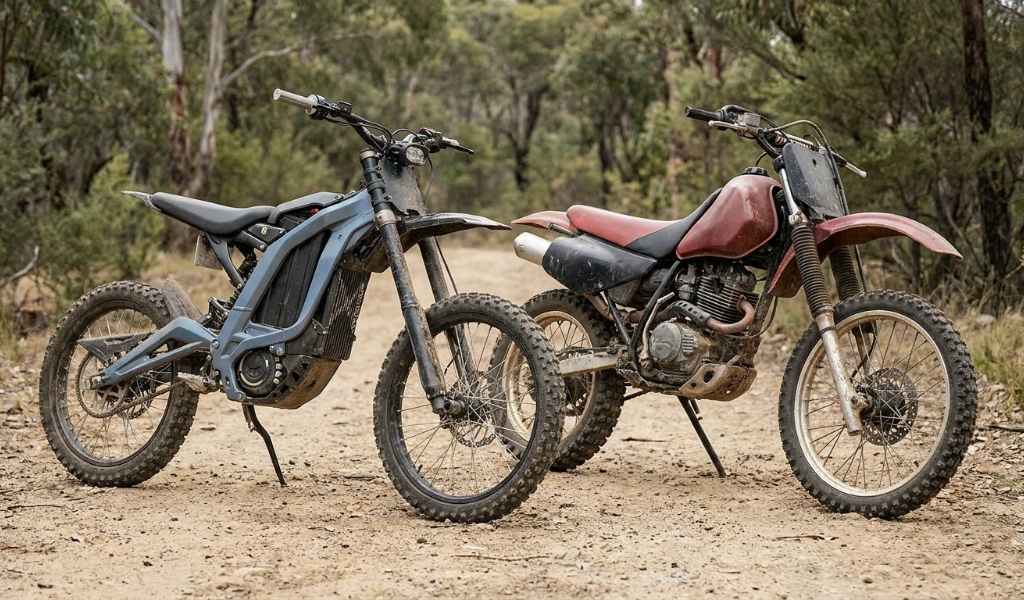
Every dirt bike forum has the same argument on repeat: electric or gas. Both sides have good points, and both sides tend to ignore whatever makes the other option look good.
The truth is simpler than the debate makes it seem. Electric and gas dirt bikes are built for slightly different priorities, and the right answer depends on how and where you actually ride. This guide breaks down the real differences in power, cost, noise, and range so you can decide based on facts instead of forum opinions.
Power and Performance
Electric motors deliver full torque the instant you open the throttle. There is no clutch, no gear shifting, and no waiting for revs to build. That makes electric bikes feel faster off the line than their power numbers suggest, and it is a big reason beginners pick them up quickly.
Gas bikes still win at the top end. A 450cc four-stroke motocross bike has sustained high-speed power that most electric dirt bikes cannot match over a full lap, especially in professional racing conditions. The gap has narrowed fast though. Performance electric bikes like the Stark Varg EX now produce output that rivals 450cc machines, which was unthinkable just a few years ago.
For casual trail riding, the performance difference barely matters. For competitive racing at the highest level, gas still has an edge, though that edge is shrinking every season.
Noise
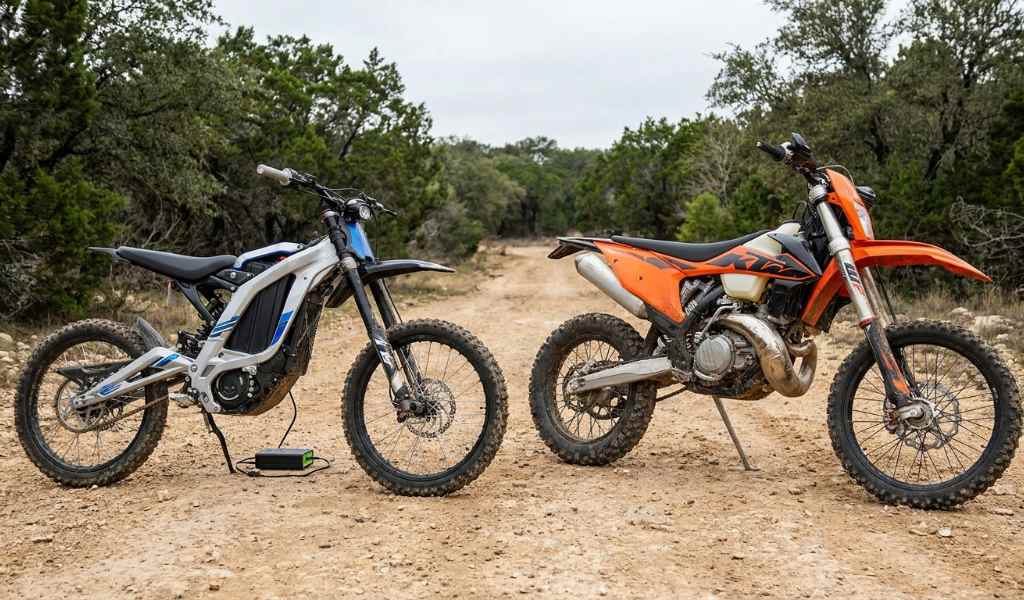
This is where electric bikes pull ahead with no real argument from the gas side. A typical gas dirt bike runs 90 to 100 decibels, loud enough to draw noise complaints and get trails shut down in residential areas. Electric bikes run closer to 60 decibels, quiet enough to ride near homes or on land where gas bikes simply are not allowed.
That quiet operation has opened up riding locations that used to be off-limits entirely. Some private land, some public trail systems, and definitely most neighborhoods are far more forgiving of an electric bike than a gas one.
Running Cost and Maintenance
Gas bikes cost more to run day to day. You are paying for fuel, oil changes, air filters, carburetor cleaning, and periodic top-end rebuilds as the engine wears. None of that is optional if you want the bike to keep running well.
Electric bikes flip that equation. Charging costs a few cents compared to several dollars in gas, and the simpler drivetrain means far fewer parts wear out. You still need to maintain the chain, brakes, and battery, but the maintenance list is shorter and cheaper across the board.
Over a few years of regular riding, the gap in total running cost between electric and gas can add up to hundreds of dollars, sometimes more depending on how hard you ride.
Range and Refueling
This is the category where gas still clearly wins. A gas dirt bike refuels in under two minutes and a full tank can carry a rider well over 60 miles of trail riding. Electric bikes usually deliver 20 to 40 miles per charge in real trail conditions, and a full recharge takes anywhere from one to several hours depending on the charger and battery size.
If you are still weighing this trade-off against everything else that matters in a purchase, our complete guide on the best electric dirt bike covers how range, price, and performance stack up across the top models on the market right now, which makes it easier to see where electric bikes close the gap and where gas still has the edge.
Swappable battery packs help close the range gap for electric riders who plan longer days out. Carrying a spare battery is still faster than waiting through a full recharge, even if it is not quite as fast as topping off a gas tank.
Resale Value and Long-Term Ownership
Gas dirt bikes have decades of resale history behind them, which makes their value more predictable. Buyers know what a used 450cc bike should sell for, and parts are easy to find even for older models.
Electric dirt bikes are a newer market, so resale value is less predictable and depends heavily on the brand. Established names like Sur-Ron and Zero hold value reasonably well because of strong demand and aftermarket support. Lesser-known budget brands can lose value fast if the company stops supporting parts or software updates.
Battery degradation is also a long-term factor unique to electric bikes. A battery that has lost significant capacity after a few years of heavy use will lower resale value more than normal wear would on a gas bike’s engine.
Which One Should You Buy
Pick gas if you ride long distances regularly, race competitively at a high level, or need to refuel fast without planning around a charger. Pick electric if you ride shorter trail sessions, value quiet operation, want lower running costs, or ride near homes and land where noise restrictions matter.
Many riders are not choosing one over the other anymore. It is common to see electric bikes used for everyday trail riding and practice, with a gas bike kept for racing or longer trips where range matters most.
Bottom Line
Neither electric nor gas wins every category, and that is exactly why the debate keeps going in circles. Electric wins on noise, running cost, and low-end torque. Gas wins on range, refueling speed, and proven resale value. The right pick depends on how you ride, not which side of the argument shouts louder online.
You may also like
-
Best Mountain Bikes of 2026: The Top Trail, XC, Enduro, Budget and E-MTB Picks
-
How to Create a Custom Build Inspired by Hutch BMX Classics
-
How to Ride a Very Velo Bike Efficiently on Hilly Roads
-
How to Choose MTB Frame Size: The Ultimate Guide for Mountain Bikers
-
Bike Types Explained: Road, MTB, Gravel & More