
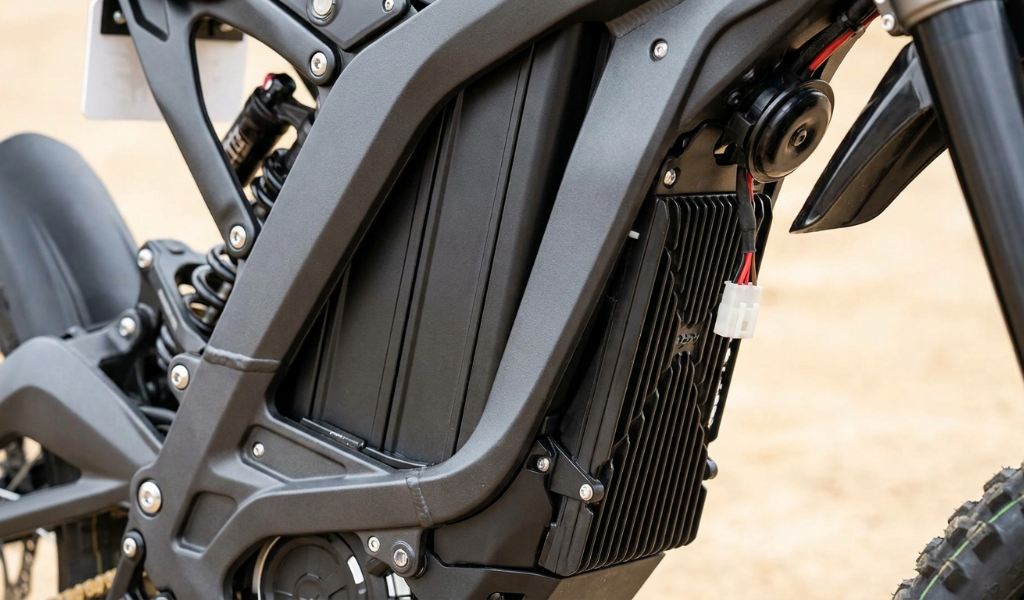
Battery range is the number that disappoints new electric dirt bike owners more than any other spec. A bike advertised with 60 miles of range on a flat, paved test loop might only deliver 20 to 25 miles on an actual trail with hills, mud, and a rider who actually uses the throttle.
This gap between marketing numbers and real-world riding is not false advertising exactly, it is just testing done under ideal conditions that rarely match how people actually ride. This guide breaks down what range to really expect, what affects it most, and how to stretch your battery further on the trail.
Average Range by Bike Type
Real-world range varies a lot depending on the category of bike and how it is ridden. Here is a realistic range for each type under normal trail conditions, not best-case marketing numbers.
| Bike Type | Typical Battery | Real-World Trail Range |
| Kids mini (700W to 1,000W) | Small, fixed | 10 to 15 miles |
| Entry-level adult (3,000W to 3,500W) | 1.5 to 2.5 kWh | 20 to 30 miles |
| Mid-range trail (6,000W to 8,000W) | 2.5 to 3.5 kWh | 20 to 40 miles |
| Performance enduro (Stark Varg class) | 6 to 6.5 kWh | 40 to 60 miles |
These numbers assume moderate trail riding with a mix of throttle use, hills, and varied terrain. Aggressive riding, steep climbs, or cold weather can cut these figures by 20 percent or more.
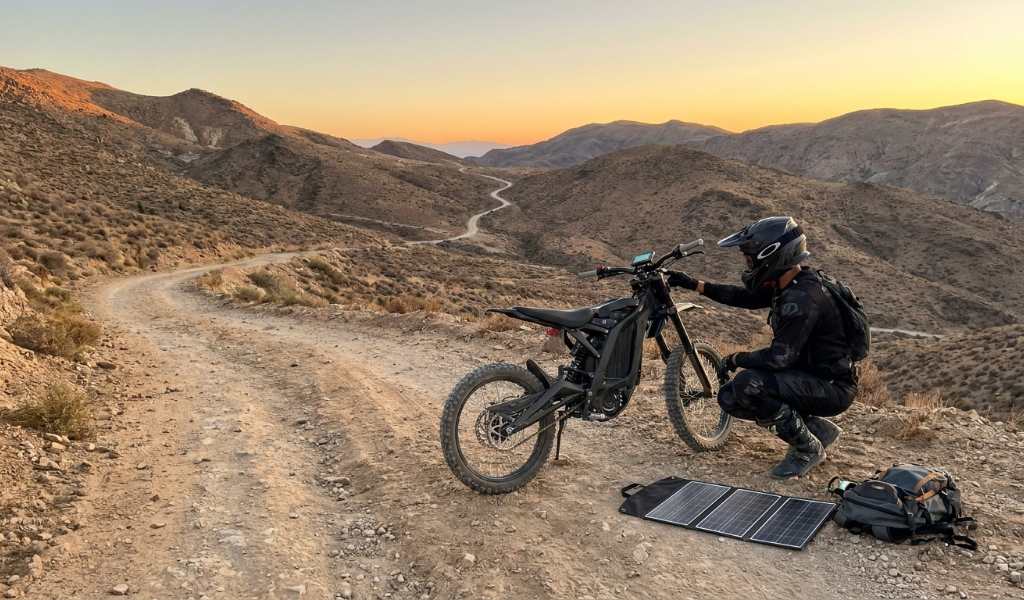
What Actually Affects Range
A few factors swing your real-world range more than most buyers expect going in.
Rider weight. A heavier rider draws more power to maintain the same speed, which reduces range compared to a lighter rider on the same bike.
Terrain difficulty. Flat, hard-packed trails use far less energy than steep climbs, loose sand, or mud, where the motor works harder to maintain traction and speed.
Riding speed and throttle habits. Constant high speed or aggressive throttle use drains a battery faster than smooth, moderate riding. This is the same principle as fuel economy on a gas bike, just applied to electrons instead of gasoline.
Temperature. Cold weather is one of the biggest range killers. Battery chemistry simply performs worse in low temperatures, and riders have reported range drops of 20 percent or more in cold conditions compared to a mild day.
Tire pressure. Underinflated tires create more rolling resistance, which makes the motor work harder than it needs to for the same distance.
Charging Times
Charging time depends on battery size and the charger that comes with the bike. Entry-level and mid-range bikes typically take 2 to 4 hours for a full charge using a standard charger. Larger performance batteries, like the one in the Stark Varg EX, can take longer with a standard charger but recover faster with a fast-charging option if the brand offers one.
Most riders charge overnight or between rides rather than waiting around for a full charge mid-session, which is why range matters more for riders squeezing in a single ride than for those who can simply plug in and wait.
Swappable Batteries Solve the Range Problem
If range anxiety is the main thing holding you back from buying an electric dirt bike, look specifically for models with swappable battery packs. Carrying a spare battery lets you double your riding time in the field without waiting out a full recharge, which is the closest electric bikes get to the two-minute refuel of a gas tank.
Not every bike supports this. Some budget and mid-range models use a fixed, non-removable battery, which means range anxiety is a real limitation rather than a solvable one. If extended range matters to you, this is a spec worth checking before anything else on the bike.
Our complete guide on the best electric dirt bike notes which models offer swappable batteries alongside their other specs, so you can compare range flexibility across the top picks for 2026 in one place rather than hunting through individual spec sheets.
A second battery costs real money upfront, often a few hundred dollars depending on the bike, but for riders who regularly ride longer sessions or remote trails, it is usually worth the investment.
How to Get More Range Out of Your Bike
A few riding habits stretch your battery further without spending any extra money. Keep throttle input smooth rather than snapping it open and closed, since gradual acceleration uses less energy than constant bursts of full power. Maintain proper tire pressure, since underinflated tires increase rolling resistance and drain the battery faster.
Use the lowest power mode that still suits the terrain, since most bikes offer multiple riding modes and the highest-power setting draws more energy even at the same speed. On longer rides, pace yourself rather than riding at max effort the entire time, the same way driving an electric car efficiently extends its range over aggressive acceleration.
Battery Lifespan and Degradation
Range also shrinks gradually over the life of the battery, separate from the factors above. Most lithium batteries used in electric dirt bikes hold up well for 500 to 1,000 charge cycles before noticeable capacity loss, which usually works out to 3 to 5 years of regular riding.
How you charge and store the battery day to day affects how fast that degradation happens. Keeping the charge between roughly 20 and 80 percent for daily storage, avoiding full drains to zero, and letting the battery cool before charging after a hard ride all help the battery hold its capacity longer.
Set Realistic Expectations
Trust real-world trail range over marketing numbers, plan rides with a buffer rather than riding to zero, and consider a swappable battery if range anxiety is a dealbreaker. Battery technology keeps improving every year, but for now, understanding what actually affects range is the best way to avoid getting stranded on the trail.