
In any fat bike vs mountain bike matchup, fat tire bikes handle snow, sand, and mud better. Mountain bikes handle hardpack, pavement, and technical singletrack faster and more precisely overall. Therefore, the fat bike vs mountain bike choice should follow your usual terrain, not habit. However, neither bike wins across every surface, season, or riding condition imaginable.
Fat tires measure 3.8 to 5.2 inches across their wide casing. In contrast, mountain bike tires measure only 2.2 to 2.6 inches. Additionally, wide tires spread rider weight across a much larger contact patch on soft ground. Meanwhile, narrower tires reduce rolling resistance and deliver quicker, sharper steering on firm ground.
Fat Bike vs Mountain Bike: Why Tire Width Decides Terrain
Many fat bikes borrow geometry, gearing, and parts standards from mountain bikes. Riders therefore compare siblings, not completely unrelated machine categories here. For example, both designs use flat bars, disc brakes, and low gears.
Tire width changes flotation, traction, cushioning, and steering on every surface. Additionally, low pressure lets fat tires deform around loose, uneven ground. Our fat tire bike guide explains how wide frames clear oversized tires. Meanwhile, suspension forks and rear shocks define most mountain bike control.
Both bikes offer wide range gearing for steep, loose, technical climbs. Additionally, fat bikes often skip rear suspension and trust tire volume. Meanwhile, mountain bikes pair suspension with lighter wheels for repeated accelerations.
Snow: The Fat Bike Beats the Mountain Bike
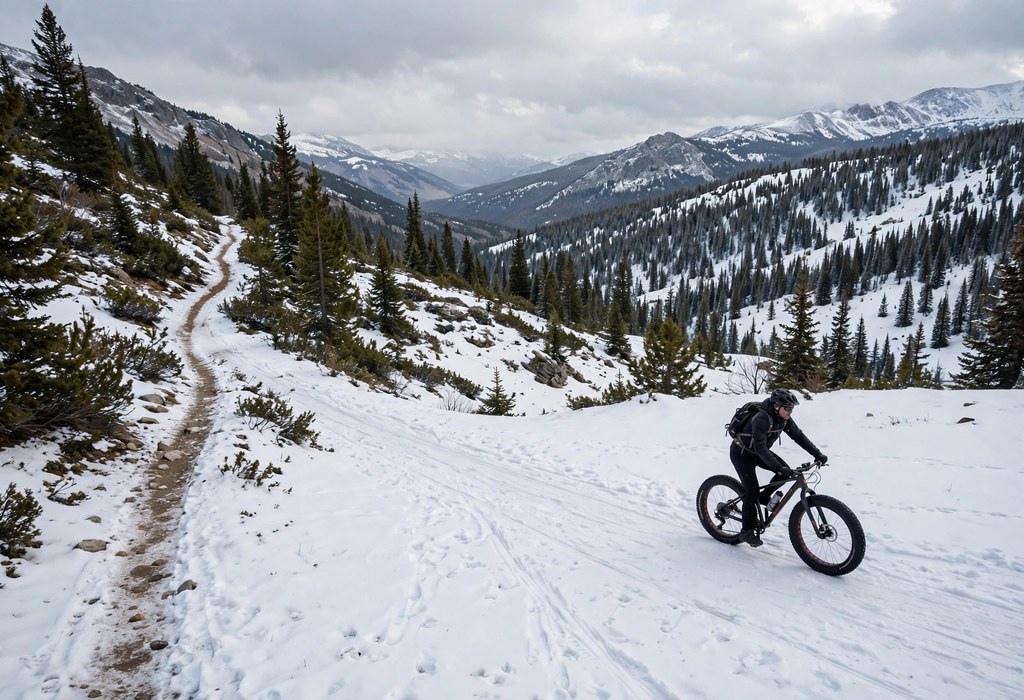
Fat tires float across packed snow instead of cutting through it. However, narrow mountain tires slice downward and quickly lose forward momentum. Therefore, groomed winter trails clearly favor the wider fat tire platform.
Low pressure expands the contact patch and improves grip on snow. Riders adjust fat tire bike tire pressure downward for softer, deeper snow cover. Studded tread options add bite on icy patches and frozen ruts. Still, deep fresh snow slows both bikes and challenges every rider.
Sand: Fat Tire Bikes Hold Their Line
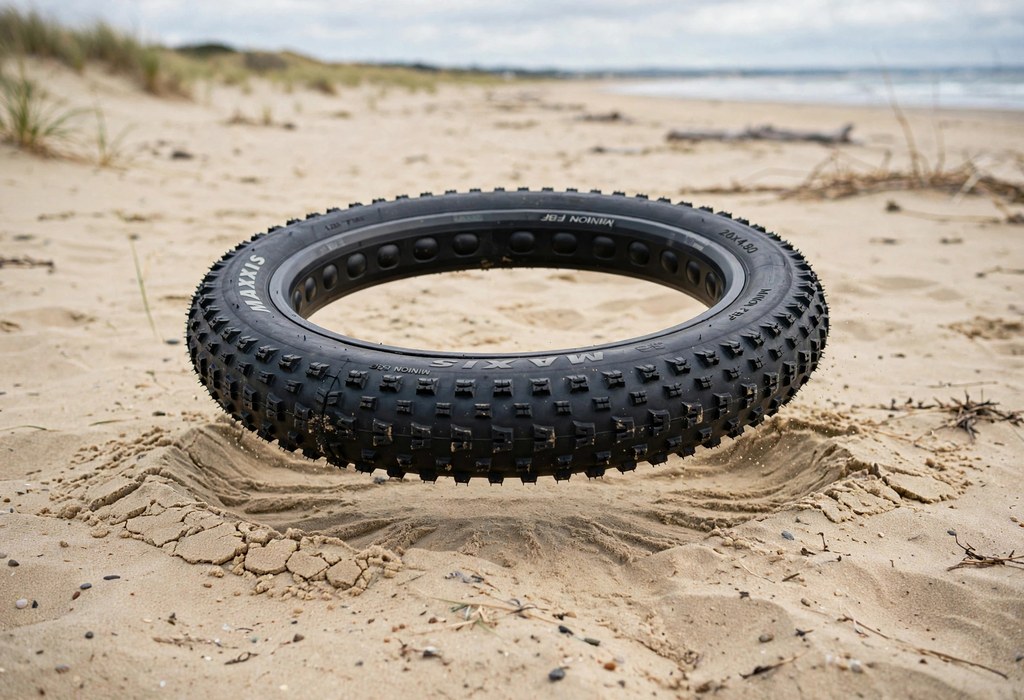
Fat tires spread weight and keep riders moving across loose sand. In contrast, mountain tires dig trenches and stall in dry patches. Therefore, beach routes and desert washes strongly favor fat tires.
Firm wet sand near water feels smoother for both bike types. However, soft dry sand quickly punishes narrow tires and tired legs. Additionally, steady pedaling and low gearing help fat bikes maintain momentum.
Riders lower pressure before dunes and raise pressure afterward for efficiency. However, fat tires still bounce and drag on firmer beach exits. Still, their huge footprint keeps steering calmer than any narrow tire.
Mud: Fat Tire Bikes Grip, Mountain Bikes Finesse
Fat tires deliver broad traction across wet roots, slick clay, and puddles. Meanwhile, knobby mountain tires shed mud quickly through open tread gaps. However, thick mud clogs any tread and slows both designs severely.
Fat tires cushion impacts and hold lines across rutted muddy corners. In contrast, lighter mountain bikes let riders hop, lift, and redirect quickly. Therefore, short muddy routes favor flotation, while longer routes reward agility.
Hardpack: The Mountain Bike Outrolls the Fat Bike
Mountain tires roll efficiently across firm dirt and packed gravel trails. Their narrower casing cuts rolling resistance and preserves speed between corners. However, fat tires feel sluggish and bouncy on the same surface.
Suspension helps mountain bikes absorb braking bumps and rocky trail chatter. Additionally, precise steering lets riders place wheels exactly between embedded rocks. Therefore, dry hardpack clearly rewards the conventional mountain bike design.
Pavement: Mountain Bikes Win on Efficiency
Mountain bikes accelerate faster and sustain speed with less rider effort. Our fat tire bike speed analysis explains why wide tires lose momentum quickly. For example, high rolling resistance makes every fat tire pedal stroke heavier.
Riders can raise fat tire pressure for smoother pavement rolling behavior. Still, even firm fat tires cannot match narrower mountain bike efficiency. Consequently, daily paved commutes strongly favor conventional mountain bike tires.
Commuters also notice extra noise, spray, and steering effort from fat tires. Meanwhile, mountain tires feel familiar, quiet, and efficient across changing city surfaces.
Technical Singletrack: Mountain Bikes Handle Quicker
Mountain bikes carve tight switchbacks and dodge rocks with quick steering. Their suspension tracks roots, drops, and rock gardens with controlled precision. However, wide fat tires wander slightly through narrow, off-camber turns.
Fat bikes still climb loose singletrack confidently and descend with remarkable stability. Additionally, their large tires absorb small bumps without any suspension fork. Therefore, flowing trails suit both, but technical trails favor mountain bikes.
Riders choose line choice carefully aboard either bike on rough descents. For example, fat tires roll over edges that deflect narrower tires sideways. Ultimately, rider skill matters, but equipment clearly shapes confidence and speed.
Matching Each Bike to Your Terrain Mix
Riders should map weekly routes before choosing either bike platform today. Additionally, honest terrain percentages prevent disappointment during the first month. For example, use this quick terrain match before you decide.
- Snow and sand: Therefore, choose fat tires for flotation, traction, and steady progress.
- Mud and loose climbs: Similarly, choose fat tires for broad grip and extra cushioning.
- Hardpack and pavement: Conversely, choose mountain tires for speed, efficiency, and quick handling.
- Technical singletrack: Overall, choose mountain bikes for suspension, precision, and fast direction changes.
- Mixed soft terrain: Consequently, choose fat tires when soft sections dominate your route.
Meanwhile, riders with mixed routes should prioritize their softest, hardest sections. A bike must handle the worst surface, not just the easiest.
Frequently Asked Questions
What is the difference between a fat tire bike and a mountain bike?
Overall, fat bikes use wider tires for flotation, while mountain bikes use narrower tires.
Why are fat bike tires slow on pavement?
However, wide tires create high rolling resistance and demand extra pedaling effort.
Is a fat tire bike better than a mountain bike for snow?
Yes, fat tires float over snow while narrow tires sink and stall.
Can a mountain bike ride on sand or snow?
Still, riders can cross firm patches, but deep surfaces quickly stop narrow tires.
Can you ride a fat tire bike on regular trails?
Additionally, fat bikes handle regular trails confidently, although they roll slower there.
Conclusion
Overall, fat tires own soft terrain and mountain bikes own firm terrain. Therefore, choose the bike that matches your routes, seasons, and goals. Finally, test both bikes on your favorite local route this week.
Compare your notes, check tire clearance, and order your chosen bike today. Alternatively, visit a local shop and book back to back test rides now.
You may also like
-
How to Choose a Fat Tire Bike for Commuting, Recreation, and Off-Road Riding
-
Fat Tire Bike Speed: What Affects Riding Speed and Performance?
-
Electric Fat Tire Bikes: How They Work, Key Features, and Benefits
-
How to Ride a Fat Tire Bike on Snow and Sand: Beginner Techniques
-
Fat Tire Bike Maintenance: A Seasonal Care and Repair Guide