
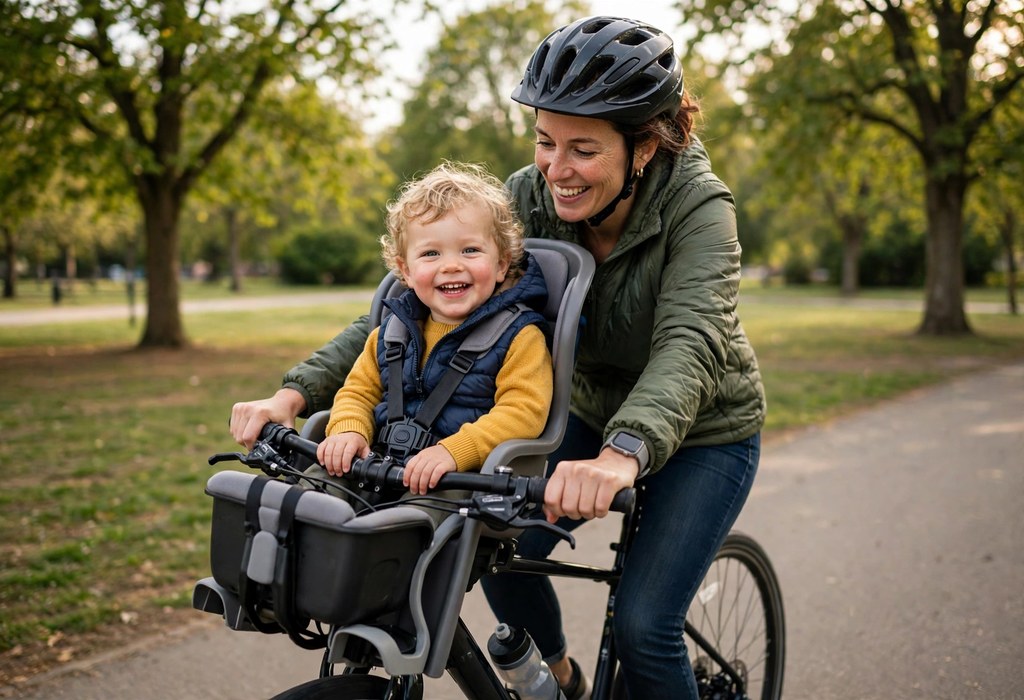
Front-mounted seats put your toddler between your arms for constant eye contact and easy chats. Rear-mounted seats carry bigger kids behind you with more room and higher weight limits. So your choice depends on your child’s size, your riding style, and how much interaction you want.
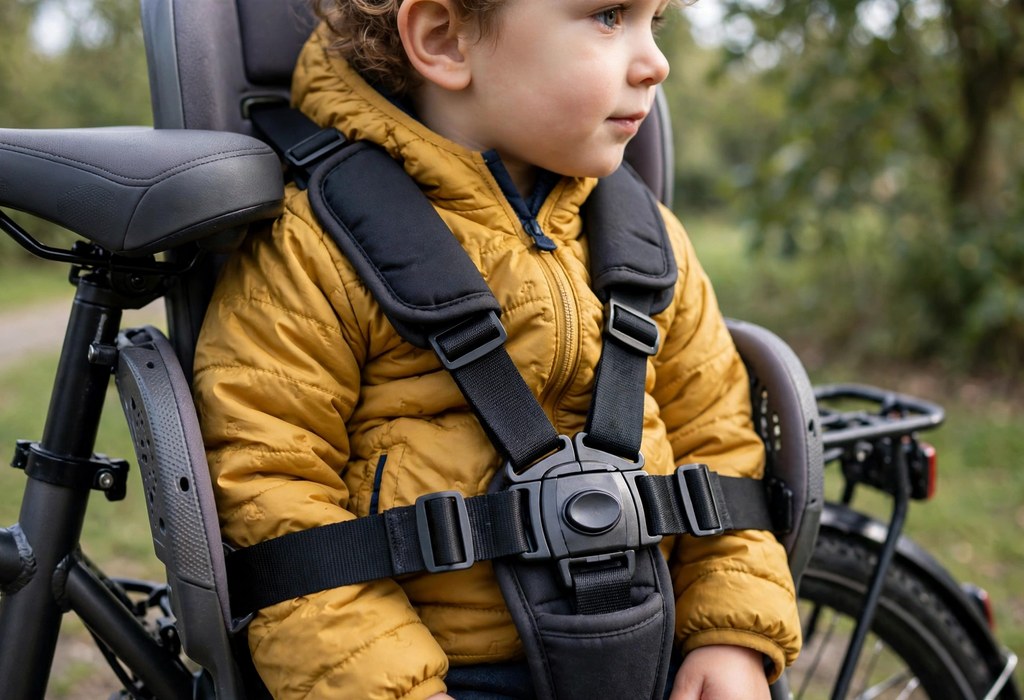
Both styles use a secure 5-point harness, adjustable footrests, and a spoke guard for safety. As a result parents can focus on fun instead of worry. Yet mounting position changes visibility, handling, and comfort more than most people expect.
Specifically the front style works best for toddlers needing constant supervision and reassurance. Meanwhile rear seats suit preschoolers who have outgrown the front position. This guide compares both options across visibility, weight limits, bike handling, and child interaction. Then you can pick the right seat for your family.
Front-Mounted Baby Bike Seats
Each handlebar-mounted seat positions your child between your arms and the handlebars. Thus you can see every smile, yawn, and sleepy nod without turning around. Kids also point at dogs, ducks, and trucks while you ride together.
Riders with an upright hybrid bike often find front seats easiest to fit. Additionally the child can lean a sleepy head on a padded handlebar accessory. Just confirm your frame offers enough knee clearance before purchase.
Front Seat Strengths
Here is what front seats do well:
- Constant supervision: keep your child in view at all times during the ride.
- Easy chats: talk, sing, and narrate the ride without shouting.
- Centered weight: weight stays within your reach, not behind you.
- Open rear rack: an open rear rack holds groceries or a diaper bag.
Front Seat Drawbacks
Now the front-seat trade-offs:
- Lower weight limit: typically front seats top out around 33 pounds.
- Tighter steering: extra weight near the bars makes turns feel heavier.
- Wind exposure: wind and bugs hit your child head-on.
- Shorter lifespan: tall toddlers outgrow the space quickly.
Rear-Mounted Baby Bike Seats
Frame mounts and rear racks carry your child behind your back. Consequently bigger kids get proper legroom, padded back support, and often a reclining option. Careful parents also review baby bike seat safety guidelines before choosing a mounting style. At the same time, the longer lifespan often justifies the higher cost.
Arms stay completely free with rear seats, which improves your grip and confidence. Furthermore panniers become tricky, so plan storage around the seat mount. Nevertheless most commuters adapt quickly with a handlebar bag instead.
Rear Seat Strengths
These rear-seat strengths stand out:
- Higher weight limit: higher limits let rear seats hold children up to 48 pounds.
- Room to grow: adjustable footrests and straps fit preschoolers comfortably.
- Smoother handling: the load sits over the rear wheel for stable steering.
- Nap-friendly design: several models recline so sleeping kids rest safely.
Rear Seat Drawbacks
Watch for these rear-seat trade-offs:
- No eye contact: rely on mirrors or frequent stops instead.
- Heavier handling: a wiggling preschooler can shift your balance suddenly.
- Occupied rack: seat claims the rear rack, so cargo options shrink.
- Tricky loading: lifting a sleepy child into the back seat feels awkward.
Head-to-Head Comparison
Visibility clearly favors the front position because your child rides within your line of sight. However your body shields a rear-seated child from wind and direct sun.
Parents who want both visibility and shelter often compare baby bike seat vs bike trailer first. Still most riders choose one seat style and adapt their habits.
Weight Limits and Ages
Generally front seats suit children from about nine months to three years. By contrast, rear seats typically serve kids from one year up to six years. Before riding, always check the printed weight limit on your specific model.
Handling and Center of Gravity
Any front load raises your bike’s center of gravity and affects steering directly. Therefore practice tight turns in an empty parking lot first. Conversely a rear load keeps the handlebars light but makes the back end swing wider.
Helmet Fit and Comfort
Every seat type requires a properly fitted helmet with no wobble or tilt. Luckily rear seats give the helmet more clearance from your back and arms. Smart riders test that the helmet does not bump the handlebars first.
Cost and Lifespan
Usually front seats cost less upfront, which attracts many first-time buyers. But rear seats last years longer, so the cost per ride often ends up lower. Ultimately consider how long you plan to ride together before choosing.
Installation and Daily Use
Clamping brackets usually attach front seats to the head tube simply. Similarly rear seats bolt onto the frame or slide onto a compatible rear rack. Always tighten every bolt and test the seat empty before loading your child.
Quick Safety Checks
Run through this checklist before every ride:
- Harness snug: tighten the 5-point harness with no twists.
- Feet secure: adjust footrests so little shoes cannot reach the spokes.
- Helmet check: confirm helmet fit every ride since kids grow fast.
- Spoke guard on: leave the guard installed to protect small feet.
Which Seat Fits Your Family
Choose a front seat if your child is under three and you value interaction most. Instead pick a rear seat for longer rides, bigger kids, or daily commuting. Savvy families check best baby bike seats by age and bike type before buying. Finally the right seat matches your child’s size and your riding routine.
Follow this quick decision guide:
- Under three years: front suits families wanting interaction and supervision.
- Ages three to six: rear seats give growing kids comfort and higher limits.
- Daily commuting: for daily commuting, rear wins on stability and storage options.
Frequently Asked Questions
What age is best for a front baby bike seat?
Babies can use most front seats from nine months, once they sit steadily and wear a helmet.
Are rear baby bike seats safer than front ones?
Either style protects kids well with correct installation, so choose based on fit, age, and riding style.
Can I use a front seat on an electric bike?
Yes, if the mount fits your frame and your bike manual allows child seats.
Do baby bike seats work with any bike?
Standard frames accept most models, but check fork, rack, and brake compatibility first.
How do I keep my child warm in a bike seat?
Dress them in windproof layers and add a blanket below the harness straps.
Conclusion
Start with your child’s age and size, then match the seat to your riding habits. Up front, the seat creates joyful conversation on short neighborhood rides. Alternatively, a rear seat supports longer adventures as your child grows. Pick your style, install it carefully, and enjoy every mile together.