
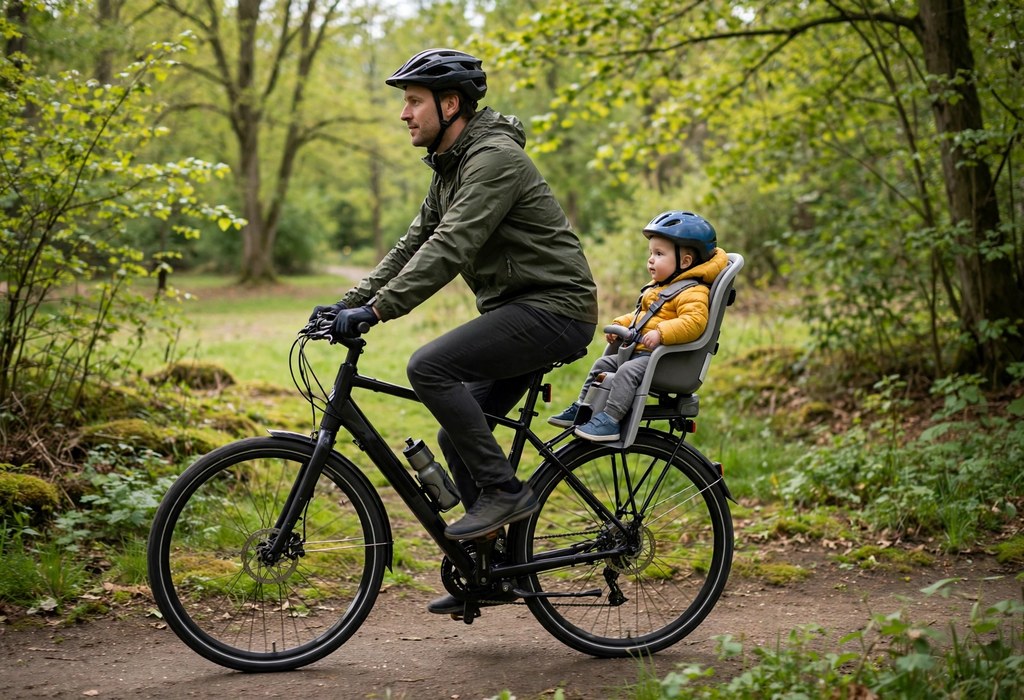
Ride slowly with a steady pace and give yourself extra stopping distance when carrying a baby. Stay upright through turns, pick calm routes, and keep your little passenger visible to every driver. These simple habits turn a family ride into a safe, joyful outing.
Cycling with your baby brings fresh air and early adventure into family life. However, a child adds meaningful weight and movement to your bicycle. Therefore, your riding style must adapt before you roll into traffic. This guide walks you through the practical habits that keep every ride steady, predictable, and safe.
Slow Down and Brake With the Extra Weight
A baby plus the baby bike seat can add 20 pounds or more. Consequently, your braking distance grows noticeably on every ride. Begin braking earlier than you normally would at every intersection. Additionally, use both brakes evenly for smooth, controlled stops.
To begin, practice in a quiet parking lot before your first real trip. In addition, load the seat with a heavy bag to simulate the weight. After that, rehearse stops at several different speeds on flat pavement. Soon your hands will learn the longer braking distance naturally.
Meanwhile, keep your speed moderate even when the path looks empty. Sudden braking with a child aboard feels unstable and frightening. Instead, ride at a pace that lets you stop gently. On downhills, check your speed early because momentum builds fast.
Protect Your Balance Through Turns
How Extra Weight Changes Your Center of Gravity
With a rear mounted baby bike seat, your center of gravity rises noticeably. As a result, the bicycle tips more easily at low speed and in sharp turns. Center your body and keep your arms relaxed while steering. Additionally, avoid sudden weight shifts that can start a wobble.
When you load your child, stand firmly over the frame and grip both brakes. If possible, ask someone to steady the bicycle. Next, lift the child in smoothly without rocking the bike. Reviewing the baby bike seat safety guidelines before your first ride builds real confidence.
Turn Wide and Slow
Above all, slow down well before every turn or curve on the route. Wide turns keep the bicycle stable under the extra load. Lean gently instead of steering sharply at higher speeds. Meanwhile, watch for gravel or painted lines that can reduce traction.
At very low speeds, the bike feels top heavy and tricky. Still, pedal lightly through slow turns to stay upright. Look where you want to go rather than down at the wheels. With practice, turning with a passenger becomes smooth and natural.
Dismount by swinging your leg carefully over the frame, never over the child. Hold the handlebar with one hand the entire time. Finally, lift your baby out before touching bags or locks. This order prevents the most common tip-over accidents.
Stay Visible and Predictable in Traffic
Start with a bright visibility vest for yourself on every ride. Add a flashing rear light and reflectors to the bicycle as well. Such simple tools help drivers notice you sooner. Consequently, cars give you more room when passing.
Use the bike lane whenever one exists on your route. Take the lane only when it is too narrow for safe passing. Signal every turn clearly with an extended arm. Following basic traffic rules keeps your movements predictable for drivers.
Next, use a bell or your voice before passing walkers on shared paths. Call out politely and pass slowly on their left side. Stay alert at driveways where cars may back out suddenly. Also avoid lingering in drivers blind spots near intersections.
Adjust for Weather and Road Surfaces
During rain, wet pavement lengthens your braking distance, so slow down further. Puddles can hide potholes that jar your baby roughly. For that reason, postpone the ride when heavy rain or strong wind arrives. Ultimately, a calm dry day makes the safest outing.
Similarly, rough surfaces bounce a small child more than they bother you. Steer clear of cobblestones, loose gravel, and broken pavement when possible. If a rough patch is unavoidable, slow to a crawl over it. Smooth asphalt gives your baby the gentlest ride.
Choose Safer Routes
Thoughtful route planning removes most dangers before you start pedaling. First, prefer parks, greenways, and quiet residential streets for family rides. Skip busy roads even when a painted bike lane exists there. Calm routes let you focus on your child instead of traffic.
Choose routes that offer:
- Wide, smooth pavement with few intersections.
- Low speed limits and light car traffic.
- Shade, rest stops, and clean air.
- An easy bailout point every mile or so.
Limit first rides to about 20 minutes or less. Over time, extend the distance gradually as your baby settles into the routine. Wrap up each ride before your child grows restless. Short happy trips build a lasting love of cycling.
Communicate With Your Child During the Ride
Throughout the ride, talk to your baby often. Narrate the trees, dogs, and buses you pass along the way. Your calm voice reassures your child through new sounds. At the same time, frequent chatter keeps you aware of their mood.
Learn your baby’s signals for hunger, boredom, or discomfort. For example, a sudden cry may mean a strap feels too tight. Pull over safely and check the harness right away. Never adjust straps while the bicycle is still moving.
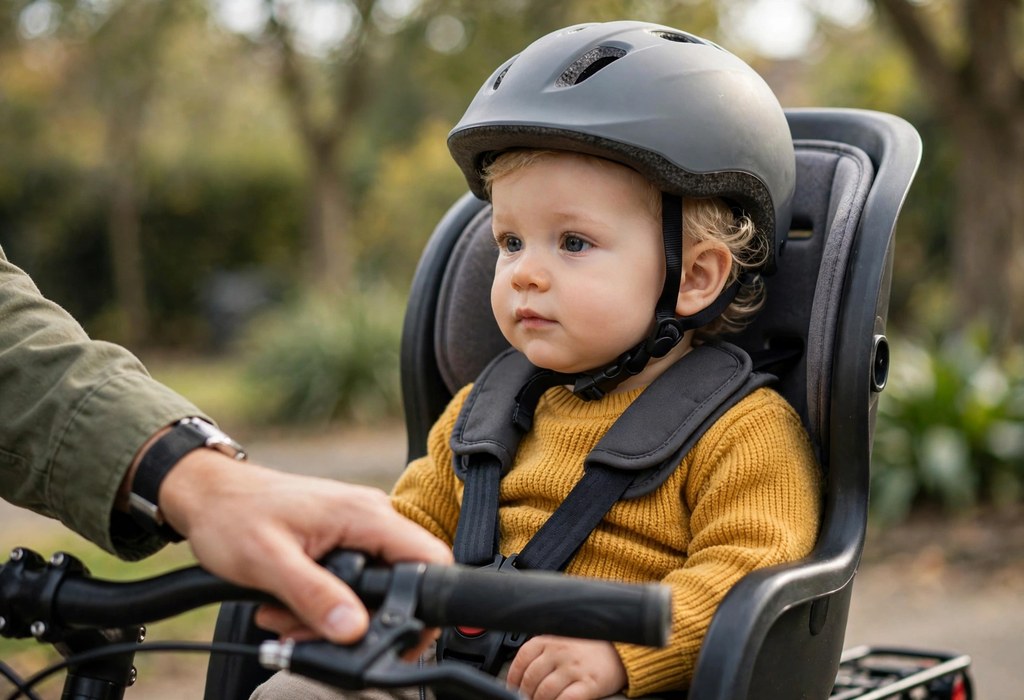
Each rest stop offers a moment for securing a child in a bike seat correctly. Wiggles often loosen straps during the ride. Double-check the bike helmet fit for babies and toddlers so the helmet stays level and snug.
Finally, bring a small snack and a favorite toy for longer outings. Stop at a playground so your baby can stretch and play. Such pauses keep the ride enjoyable for both of you. Happy riders want to go again tomorrow.
Frequently Asked Questions
What age can a baby ride in a baby bike seat?
Most experts recommend waiting until your baby reaches 12 months and sits unsupported.
How fast should you ride with a baby on board?
Ride at a relaxed pace, roughly half your normal solo speed, and brake early everywhere.
Should my baby wear a helmet in a bike seat?
Yes, always fit your baby with a lightweight, properly sized helmet before every single ride.
Can you ride a bike with a baby in the rain?
Avoid rain because wet roads lengthen braking distance and make little passengers cold and uncomfortable.
How do I keep my baby calm during a bike ride?
Talk cheerfully, bring snacks, take play breaks, and stop promptly whenever your baby fusses.
Ride Safe and Enjoy Every Mile Together
In short, safe riding with a baby comes down to slower speeds, earlier braking, and calm routes. These habits quickly become second nature with practice. Your child will soon associate the bicycle with fun and fresh air.
Start with a short ride this weekend and enjoy the adventure. Afterward, plan the next ride and build a lifetime of happy cycling memories.