
You find the right fat tire bike sizing by matching your inseam, standover height, and reach. First, measure your inseam in riding boots and compare it against standover height carefully. Then, confirm that reach and stack suit your torso, arms, and preferred riding posture.
Additionally, wide fat tires lift the frame slightly and reduce clearance at every stop. Our fat tire bike guide explains how tire width and volume shape frame geometry. Therefore, you should never transfer your size directly from a narrow tire bike. However, one careful measurement routine makes the whole sizing process simple and repeatable.
Why Fat Tire Sizing Feels Different

However, fat bikes place wide tires under a fairly conventional frame design. For example, a four inch tire raises the axle and top tube slightly. Therefore, the same frame can feel taller on fat tires than expected.
Additionally, riders often stop on snow, sand, or loose and uneven ground. Meanwhile, boots and soft surfaces steal precious clearance during each dismount attempt. Finally, you need extra room to step off safely without rushing.
Measure Your Inseam Before Anything Else
Take an Accurate Cycling Inseam Measurement
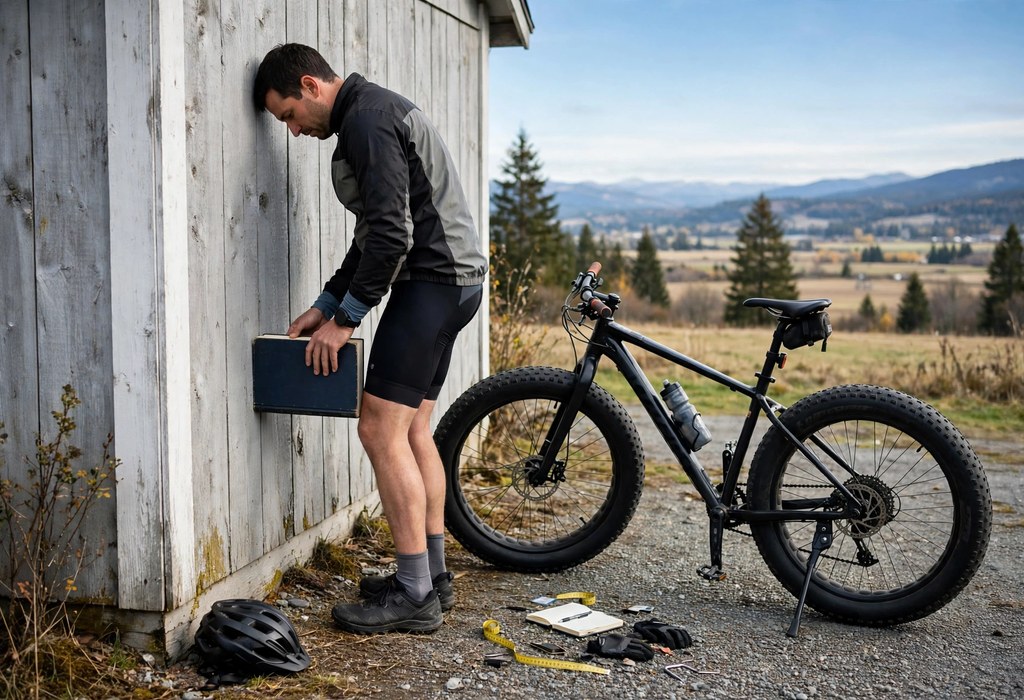
First, stand against a wall wearing your usual riding boots or shoes. Next, trap a book firmly between your legs at crotch height level. Then, measure from the floor to the top edge of the book.
Additionally, repeat the measurement twice and record the larger number each time. For example, a helper keeps the book level while you stand straight. Therefore, you avoid tilted readings that shrink your true inseam measurement significantly.
Check Standover Clearance Over the Top Tube
Standover height measures the ground to top tube distance at midpoint. Ideally, you keep one to two inches clearance above the tube. However, snow riders should target the upper end of that range.
For example, thick winter boots add height but also demand more room. Additionally, packed snow lifts your feet and reduces your effective clearance quickly. Therefore, you should test standover while wearing your full winter kit.
Read a Fat Tire Bike Sizing Chart
Size charts link rider height and inseam to recommended frame sizes. Additionally, most brands label frame sizes from XS through XL for riders. Meanwhile, other brands list seat tube lengths in inches or centimeters instead.
- Seat tube length: Charts show this vertical measurement in inches or centimeters.
- Standover height: You compare this number directly against your measured inseam value.
- Effective top tube: This horizontal measurement predicts your stretched or upright posture.
- Reach and stack: These two numbers describe cockpit length and bar height.
- Rider height range: Brands pair each frame size with a height band.
However, height bands overlap heavily because riders proportion legs and torsos differently. For example, two riders at equal height can need different frame sizes. Therefore, you should always trust inseam and reach over height alone.
Understand Reach, Stack, and Top Tube
Use Reach to Judge Cockpit Room
Reach measures horizontal distance from bottom bracket to head tube top. Additionally, longer reach stretches your torso and shifts weight forward noticeably. Meanwhile, shorter reach creates an upright posture and quicker steering feel overall.
For example, trail riders often prefer slightly longer reach for stability. However, relaxed riders often prefer shorter reach for all day comfort. Therefore, compare reach against a bike that already fits you well.
Use Stack to Judge Bar Height
Stack measures vertical distance from bottom bracket to head tube top. Additionally, higher stack raises the bars and relieves pressure on hands. For example, riders with stiff backs usually welcome a higher stack value.
Meanwhile, lower stack drops the bars and creates an aggressive posture instantly. Therefore, you should match stack to your flexibility and typical ride length. Finally, you can fine tune bar height later with spacers and stems.
Set Saddle Height After Fat Tire Bike Sizing
First, set saddle height after you confirm frame size and standover. Next, place your heel on the pedal at its lowest point gently. Then, adjust the seatpost until your leg stays nearly straight without locking.
- Saddle height: You raise or lower the seatpost in small increments.
- Saddle fore and aft: You slide the saddle rails to adjust knee position.
- Stem length: You swap stems to shorten or lengthen cockpit reach slightly.
- Handlebar rise: You choose higher bars to lift your riding posture comfortably.
- Spacer stack: You move headset spacers to raise or lower bars.
However, small adjustments refine fit but never rescue a wrong size. As you choose a fat tire bike for varied terrain, prioritize frame fit first. Finally, recheck saddle height after swapping pedals, shoes, or thick insoles.
Decide Between Two Sizes With Fat Tire Bike Sizing
Riders often land between two sizes on the same size chart. Additionally, torso length and arm reach usually break the tie cleanly. For example, long arms and flexible backs often suit the larger frame.
Meanwhile, technical terrain and frequent dismounts usually favor the smaller frame strongly. However, smooth snow routes and long rides often favor the larger frame. Therefore, match the tiebreaker to your terrain, reach preference, and control needs.
Additionally, fit still comes first when you compare two close sizes. Riders who haul cargo should also review fat tire bike weight limits before deciding. Finally, a short test ride confirms which size truly feels natural.
Frequently Asked Questions
What size fat tire bike do I need for my height?
You choose size by inseam and reach first, then confirm height on charts.
How much standover clearance do I need on a fat bike?
Ideally, you keep one to two inches clearance, especially when wearing winter boots.
How do I measure my inseam for a fat bike?
First, you measure from the floor to a level book at crotch height.
Should I size up or down when between fat tire bike sizes?
Generally, you size down for technical terrain and up for stable cruising comfort.
Does tire width change which frame size I should choose?
Yes, wider tires raise standover slightly, so you must recheck clearance after choosing.
Conclusion
Overall, accurate inseam, standover, reach, and stack measurements drive every sizing decision. Additionally, size charts narrow choices, but your proportions make the final call. Therefore, measure carefully, compare geometry numbers, and test ride before buying today.
Finally, grab a tape, book, and helper, and measure your inseam now. Then, shortlist two frame sizes and compare their reach and standover numbers. Ultimately, choose the frame that feels controlled, comfortable, and easy to dismount.
You may also like
-
How to Choose a Fat Tire Bike for Commuting, Recreation, and Off-Road Riding
-
Fat Tire Bike Speed: What Affects Riding Speed and Performance?
-
Electric Fat Tire Bikes: How They Work, Key Features, and Benefits
-
How to Ride a Fat Tire Bike on Snow and Sand: Beginner Techniques
-
Fat Tire Bike Maintenance: A Seasonal Care and Repair Guide