
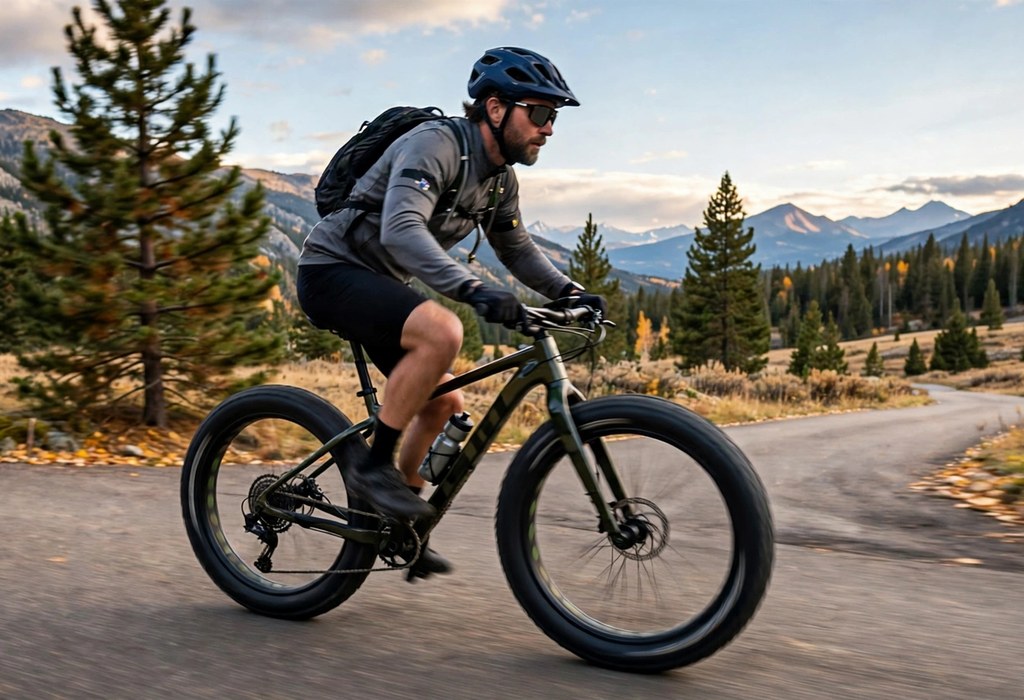
Most riders cruise at eight to twelve miles per hour on pavement. However, fat tire bike speed holds on snow and sand where narrow tires stall. Rolling resistance, tire pressure, and surface shape every ride’s realistic cruising speed. Meanwhile, heavy wheels demand patience during starts and steep climbs.
Additionally, gearing, cadence, rider power, and drag change performance on every route. For example, firm ground rewards higher pressure and steady pedaling effort. Readers explore the full fat tire bike guide before choosing speed-focused setup changes. Therefore, smart adjustments help riders gain speed without losing essential traction.
What Sets Fat Tire Bike Speed Apart

Wide tires create a large contact patch on every surface. Additionally, that broad patch spreads rider weight across soft ground effectively. However, the same patch increases rolling resistance on firm pavement. Therefore, riders trade outright pace for flotation, grip, and confidence.
Narrow tires roll quickly because they deform less under load. Riders comparing motor support can review electric fat tire bikes for brief context. In contrast, fat tires flex constantly and consume extra rider energy. Moreover, knobby tread adds vibration and drag on smooth asphalt.
Rolling Resistance and Tire Pressure
Rolling resistance describes energy a tire loses through constant flexing. Additionally, low pressure increases flex and slows riders on pavement. However, low pressure improves flotation and traction on loose surfaces.
How Pressure Changes the Contact Patch
Lower pressure widens the contact patch and boosts grip noticeably. For example, soft snow rewards pressures near five to eight psi. Meanwhile, firm trails suit roughly eight to twelve psi for balance. Finally, pavement rides feel faster near twelve to fifteen psi.
Finding Your Fastest Pressure
Riders should change pressure in small steps between comparable rides. Additionally, riders should track speed, comfort, and grip after each adjustment. Therefore, careful testing reveals a personal sweet spot for each surface.
Moreover, tread choice also shapes rolling resistance every mile. Specifically, smooth center tread rolls faster than tall aggressive knobs.
- Smooth tread: Riders gain easier rolling on pavement and hardpack trails.
- Knobby tread: Riders gain stronger bite on snow, sand, and mud.
- Low pressure: Riders gain flotation but lose efficiency on firm ground.
- Higher pressure: Riders gain speed but sacrifice grip on loose surfaces.
How Surface and Terrain Change Speed
Surface firmness changes speed more than any other single factor. For example, hardpack lets tires roll with minimal sinking and flex. However, deep sand forces tires to climb constantly from soft ruts. Therefore, riders post slower averages on soft ground despite strong effort.
Snow creates similar challenges through variable depth and hidden ice. Additionally, fresh snow slows riders more than packed, groomed trails. Meanwhile, gravel rewards steady pacing and careful line choices throughout.
Mountain bikes usually accelerate faster on hardpack and technical climbs. Riders often compare formats using a fat tire bike vs mountain bike breakdown. However, fat bikes maintain momentum better across sand and snow. Consequently, terrain decides which bike records the faster average speed.
Gearing, Cadence, and Rider Power
Gearing determines how easily riders maintain an efficient pedaling rhythm. Additionally, low gears help riders spin through sand, snow, and climbs. However, low gears limit top speed on flat, firm ground.
Cadence and Sustainable Power
Most riders sustain speed best at seventy to ninety revolutions per minute. For example, steady cadence conserves energy better than repeated hard surges. Moreover, stronger riders produce more power and overcome resistance longer. Therefore, fitness shapes cruising speed more than small equipment differences.
Shifting for Speed and Traction
Riders should shift early before climbs and soft sections begin. Additionally, smooth shifting preserves momentum and protects valuable rear traction. Finally, riders should avoid cross-chaining because friction wastes pedaling power.
Weight, Aerodynamics, and Momentum
Heavy wheels and tires increase rotational weight at the rim. However, rotational weight slows acceleration more than steady cruising speed. Additionally, riders feel that sluggish response during starts and turns. Meanwhile, moving fat bikes hold momentum well across rough ground.
Aerodynamic drag grows rapidly as riders push beyond moderate speeds. For example, wide tires, upright posture, and loose clothing increase drag. Therefore, riders gain little from chasing very high pavement speeds. Consequently, steady effort delivers better results than brief maximal sprints.
Realistic Fat Tire Bike Speed Expectations by Terrain
Typical speeds vary widely with rider fitness, load, and conditions. Additionally, wind, temperature, and trail grooming change results every day. Therefore, riders should treat ranges below as honest planning guides.
- Pavement: Most riders cruise near eight to twelve miles per hour.
- Hardpack trails: Most riders cruise near eight to eleven miles per hour.
- Gravel roads: Most riders cruise near seven to ten miles per hour.
- Packed snow: Most riders cruise near five to eight miles per hour.
- Soft sand: Most riders cruise near four to seven miles per hour.
Downhill sections naturally raise speed beyond these flat-ground cruising ranges. However, riders should control downhill speed carefully on loose surfaces. Moreover, motors add assistance but still face resistance and drag.
How to Improve Fat Tire Bike Performance
Riders improve performance fastest through pressure, pacing, and smooth technique. Additionally, regular maintenance reduces drivetrain friction and preserves rolling efficiency. Finally, realistic goals keep training focused on terrain riders love.
- Check pressure often: Riders match pressure precisely to each planned surface.
- Spin steadily: Riders hold comfortable cadence and shift before resistance spikes.
- Reduce drag: Riders wear fitted clothing and keep posture comfortably low.
- Maintain the drivetrain: Riders clean and lubricate chains for smoother power.
Training and Technique Tips
Interval sessions build rider power for starts, climbs, and headwinds. For example, short efforts on hardpack teach quick, controlled acceleration. However, riders should recover fully between hard efforts during training.
Frequently Asked Questions
How fast can a fat tire bike go on pavement?
Most riders cruise near eight to twelve miles per hour on pavement.
Are fat tire bikes slower than mountain bikes?
Fat bikes usually cruise slower on pavement but move faster across snow.
What tire pressure makes a fat bike faster?
Higher pressure near twelve to fifteen psi improves speed on firm ground.
Why do fat tire bikes feel hard to accelerate?
Heavy wheels create rotational weight and demand extra power during starts.
Can you ride a fat tire bike on pavement daily?
Riders can ride pavement daily but accept slower, harder pedaling effort.
Conclusion
Fat tire bike speed rewards riders who match setup to surface. Additionally, correct pressure, steady cadence, and realistic expectations transform every ride. Therefore, test one adjustment today and record speed on your route.
Start your next ride with a pressure check and steady pacing. Finally, share your fastest terrain results with fellow fat bike riders.
You may also like
-
How to Choose a Fat Tire Bike for Commuting, Recreation, and Off-Road Riding
-
Electric Fat Tire Bikes: How They Work, Key Features, and Benefits
-
How to Ride a Fat Tire Bike on Snow and Sand: Beginner Techniques
-
Fat Tire Bike Maintenance: A Seasonal Care and Repair Guide
-
Fat Tire Bike Pros and Cons: Benefits and Drawbacks for Everyday Riders