
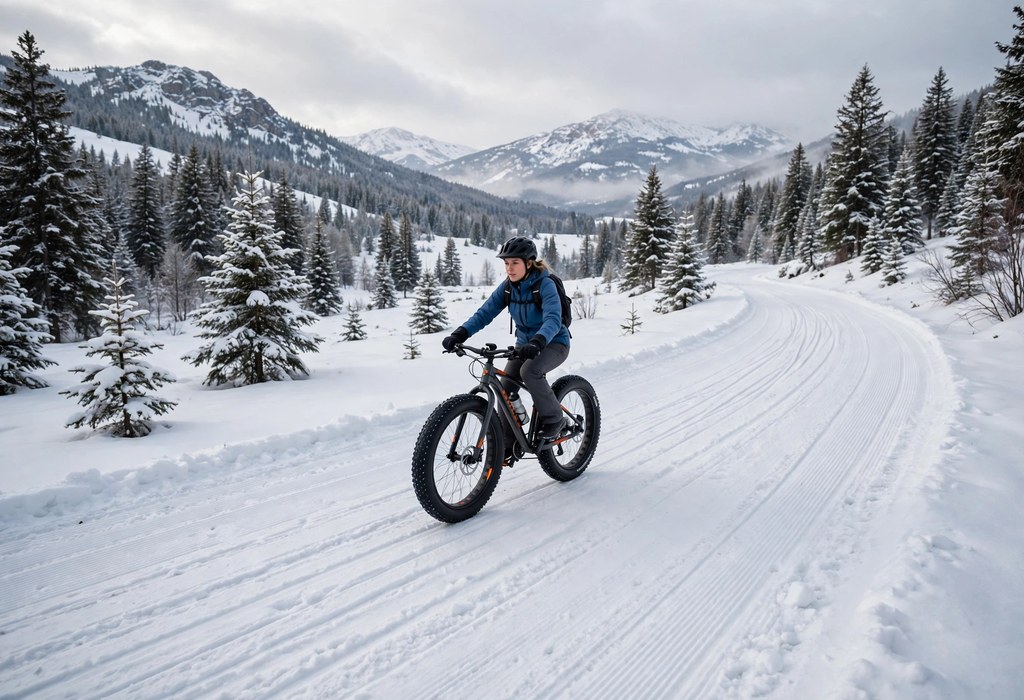
You ride a fat tire bike best on snow and sand by staying seated and spinning smoothly. Additionally, you steer with gentle inputs, brake before turns, and choose the firmest available line. Therefore, wide tires provide float and traction instead of cutting deeply into soft, shifting surfaces.
First, beginners often struggle because normal trail habits reward speed, standing climbs, and sharp steering. However, soft surfaces punish sudden effort and reward patience, balance, and smooth weight distribution instead. For example, groomed trails and wet sand offer forgiving places for learning basic control skills.
Meanwhile, this guide covers technique only and leaves detailed setup choices for separate resources. Finally, you will practice each skill gradually and build control before attempting longer, softer routes.
Ride a Fat Tire Bike With Control on Soft Surfaces
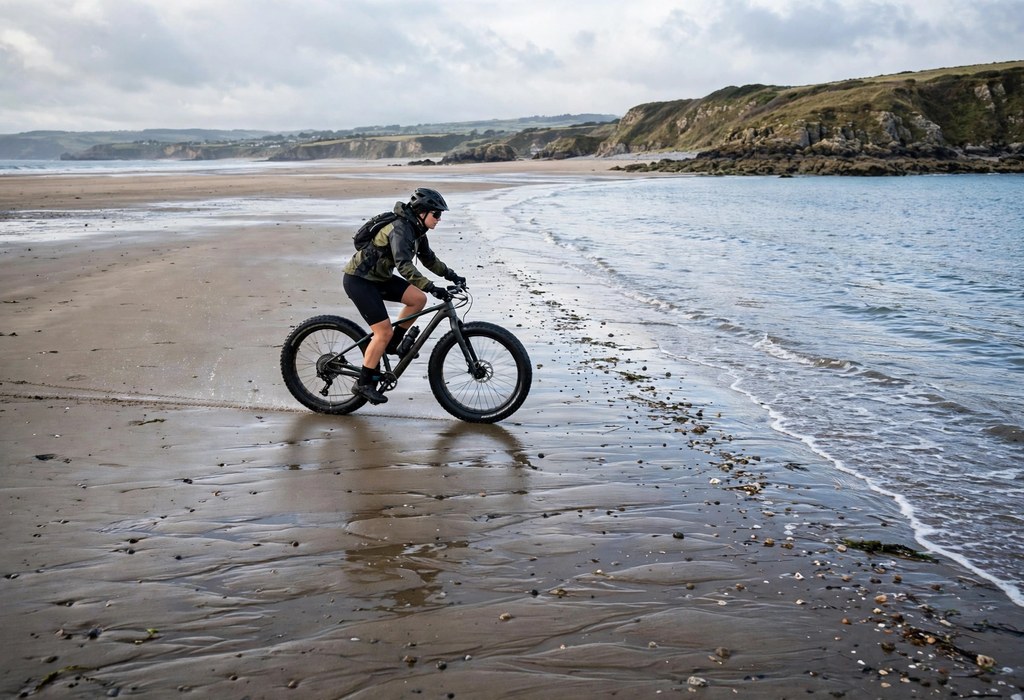
First, you center your weight slightly behind the saddle center point. Additionally, this position loads the rear wheel and improves drive traction. Meanwhile, your front wheel stays light and floats over loose patches.
Next, you bend your elbows and relax your shoulders throughout the ride. You keep your grip firm but never tense or rigid. Therefore, the bike moves naturally underneath you without sudden corrective jerks. For example, a complete fat tire bike guide explains how design supports this balanced riding position.
Seated Position and Weight Distribution
However, you avoid leaning far forward over the handlebars. Instead, you slide slightly backward when the surface becomes softer. Also, you keep your heels level and your hips loose.
- Relaxed arms: Absorb bumps and prevent steering overcorrection.
- Stable hips: Guide direction changes with smooth body movement.
- Light front end: Let the wheel track across uneven soft patches.
- Level pedals: Maintain clearance and balance through rutted sections.
Pedaling a Fat Tire Bike for Better Traction
First, you select a low gear before entering soft terrain. Additionally, you spin a steady cadence instead of pushing hard strokes. You stay seated during climbs and preserve rear wheel grip.
However, standing suddenly often breaks traction and spins the rear wheel. Instead, you increase effort gradually and maintain even pedal force. For example, smooth circles deliver power without surging or stalling.
Starting, Climbing, and Restarting Softly
Next, you start pedaling gently from a complete stop. You choose firmer ground for restarts whenever possible. Finally, you walk short unrideable patches without frustration or rushing.
Additionally, correct fat tire bike tire pressure supports float, but detailed settings belong elsewhere. Therefore, you focus here on pedaling technique and body control.
Steering a Fat Tire Bike Without Losing Grip
First, you look far ahead toward your intended exit line. Additionally, you guide turns with your hips and shoulders. You avoid sharp handlebar twists on any soft surface.
However, the front wheel may wander slightly across loose sections. Instead, you allow small movements and correct them gradually. For example, relaxed steering prevents the tire from digging sideways.
Braking Modulation for Turns and Descents
Next, you brake gently and mostly before each turn. You squeeze both levers progressively and avoid locking either wheel. Therefore, you enter corners slowly and accelerate only afterward.
Meanwhile, balanced braking preserves control during gentle descents and flat approaches. Also, understanding fat tire bike pros and cons helps beginners set realistic expectations for control.
Ride a Fat Tire Bike on Snow With Momentum
First, you follow groomed trails and existing tracks on snow. Additionally, packed snow provides predictable float and reliable steering response. You avoid deep powder during early practice sessions.
However, fresh tracks can hide ruts and uneven frozen ridges. Instead, you scan ahead and pick smooth, consistent lines early. For example, shaded sections often hold firmer snow than sunny patches.
Climbing and Descending Packed Snow
Next, you climb seated and spin patiently up gentle slopes. You shift weight forward slightly only when the front lifts. Finally, you descend relaxed and brake early on approaches.
Meanwhile, you follow visible tracks when fresh snow covers trail markers. Also, you reduce speed before icy patches and cross them straight.
Ride a Fat Tire Bike on Sand With Float
First, you enter sand carrying comfortable speed from firmer ground. Additionally, you maintain momentum because restarting in soft sand wastes energy. You pedal continuously and avoid coasting through deep sections.
However, dry loose sand slows the bike very quickly. Instead, you target firmer wet sand near the waterline where legal and permitted. For example, darker sand usually signals a firmer riding surface.
Turning and Stopping on Sand
Next, you make wide turns and steer mainly with body movement. You slow before turns and avoid sudden front brake grabs. Finally, you stop on firm patches whenever conditions allow stopping.
Meanwhile, you watch for soft pockets beyond the firm waterline band. Also, you plan exits onto firm ground before entering deep sections.
Common Beginner Mistakes and Simple Fixes
First, many beginners rush entries and lose momentum immediately. Additionally, tense arms create jerky steering and early fatigue. You correct both problems by slowing down and relaxing deliberately.
However, riders often brake during turns and slide unexpectedly. Instead, you finish braking early and roll through turns smoothly. For example, calm exits prove your line choice worked well.
- Chasing speed: Slow down and preserve steady forward momentum.
- Forcing steering: Relax your grip and guide the bike gently.
- Standing climbs: Sit down and spin an easier gear instead.
- Ignoring lines: Scan ahead and choose firmer ground early.
Frequently Asked Questions
Can you ride a fat tire bike on the beach?
Additionally, you can ride permitted beaches by choosing firm sand and maintaining momentum.
How do you keep a fat bike from sinking in sand?
Therefore, you keep moving, stay seated, and choose firmer sand with gentle steering.
Why does my fat bike rear wheel spin on snow?
Therefore, standing and pushing hard gears often break rear wheel traction suddenly.
Should you stand up when climbing on snow or sand?
Instead, you stay seated and spin a low gear for better traction.
How should beginners brake on snow and sand?
Overall, you brake gently and progressively, mostly before turns, on both surfaces.
Conclusion
Overall, soft surface riding rewards calm inputs, seated pedaling, and smart line choices. Additionally, you improve fastest by practicing short sections and repeating successful movements. You build confidence gradually and notice progress during every ride.
Finally, choose a groomed trail or permitted beach section this week. Then, practice one technique per lap and track your progress. Start today, ride smoothly, and enjoy exploring softer terrain confidently.
You may also like
-
How to Choose a Fat Tire Bike for Commuting, Recreation, and Off-Road Riding
-
Fat Tire Bike Speed: What Affects Riding Speed and Performance?
-
Electric Fat Tire Bikes: How They Work, Key Features, and Benefits
-
Fat Tire Bike Maintenance: A Seasonal Care and Repair Guide
-
Fat Tire Bike Pros and Cons: Benefits and Drawbacks for Everyday Riders