
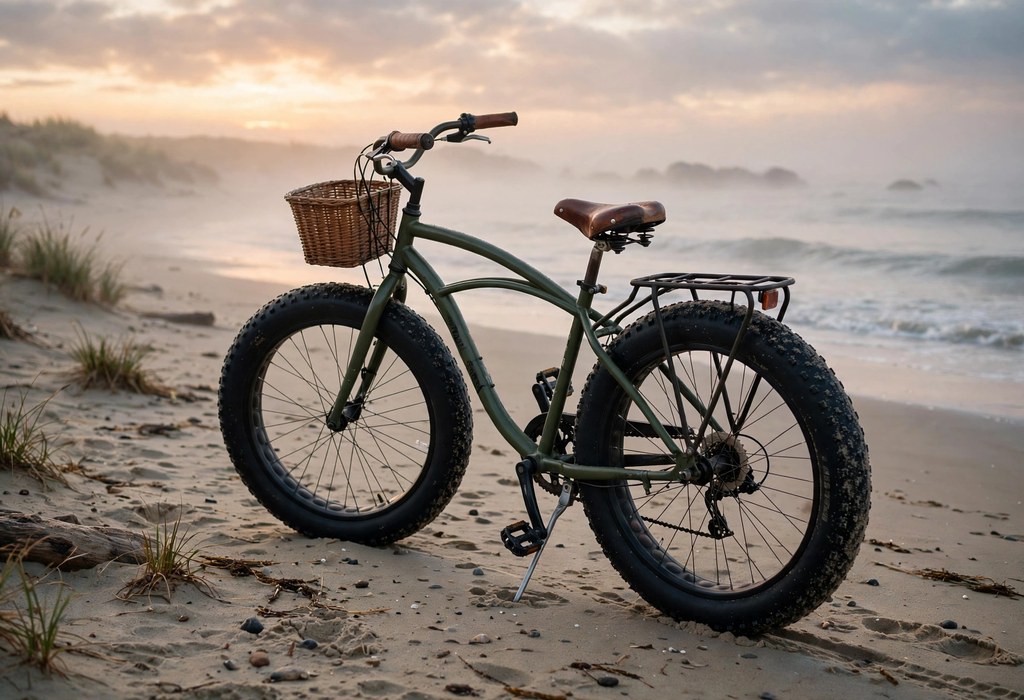
Fat tire beach cruiser bikes handle sand, boardwalks, and soft coastal trails with steady confidence. Their wide tires spread rider weight across a larger surface, so wheels float instead of sinking deeply. Meanwhile, the relaxed cruiser frame keeps posture upright, comfortable, and easy to control.
A classic beach cruiser bike adds swept-back handlebars, a wide saddle, and simple controls. Therefore, riders can shift smoothly from firm boardwalk planks to loose sand without changing bikes. In addition, wide tires absorb small bumps, cracks, and shells that would jar narrower wheels. This guide explains tire size, pressure, gearing, comfort, and care for coastal cruiser riding.
Why Fat Tires Float Over Sand
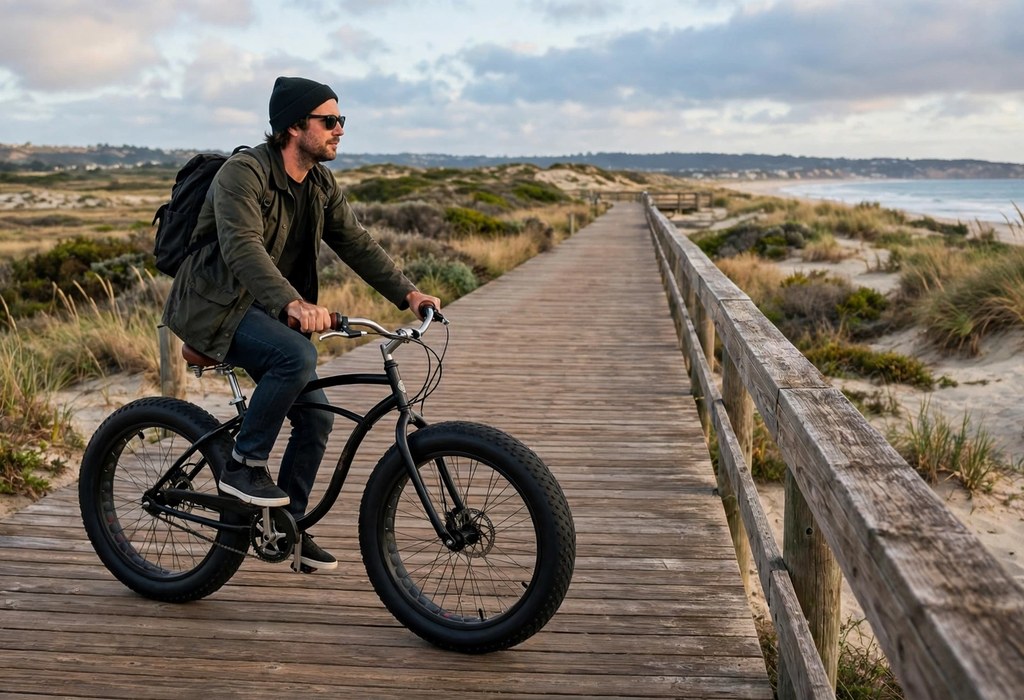
Wide tires create a broad contact patch that distributes weight more evenly across loose ground. Consequently, each wheel presses down with less force per square inch than a narrow tire. As a result, the bike stays higher on soft sand instead of digging a rut.
Narrow tires cut through dry sand like a knife, and pedaling quickly becomes exhausting. In contrast, fat tires roll over the surface with a steadier, more forgiving feel. Additionally, the larger air volume cushions every bump, so long beach rides feel smoother.
Hard-packed sand near the waterline suits almost any cruiser tire width. However, dry sand above the tide line demands genuine flotation for comfortable riding. For example, a morning ride crosses soft patches, firm strips, and windblown ridges quickly.
Riding Boardwalks With Confidence
Boardwalks reward fat tires with grip, stability, and a calm ride over wooden planks. Wide rubber bridges small gaps between boards, so steering stays predictable at relaxed speeds. Furthermore, the cushioning effect softens expansion joints, nails, and weathered planks.
Crowded boardwalks demand patience, clear signals, and a moderate pace around walkers. Riders should yield at crossings, announce passes politely, and slow near shops and benches. Similarly, wet boards after rain or sea spray need gentler braking and wider turns.
Fat tires also handle the transition from boardwalk to beach access ramps with ease. Sand often collects at ramp edges, and narrow tires can slip or stall there. Meanwhile, a fat tire cruiser rolls through that loose strip and keeps momentum toward the shore.
Choosing The Right Fat Tire Cruiser
Frame fit matters more than flashy extras when choosing a coastal cruiser. Riders should stand over the frame comfortably and reach the handlebars without stretching. Moreover, a step-through frame simplifies mounting when carrying towels, snacks, or beach gear.
- Tire width: Choose tires around four inches wide for dependable sand flotation.
- Frame material: Pick aluminum for lighter handling or steel for sturdy, classic durability.
- Wheel size: Select larger wheels for smooth rolling and smaller wheels for easier mounting.
- Saddle comfort: Look for a wide, padded saddle that supports relaxed, upright posture.
- Accessory mounts: Check for racks and fenders that carry gear and block spray.
Single-speed models suit flat beaches and short boardwalk rides perfectly well. Multi-speed models help riders climb ramps, bridges, and gentle coastal hills with less effort. Therefore, riders who explore varied coastal routes often prefer gears for flexibility.
Tire Pressure And Traction Basics
Tire pressure changes how a fat tire grips sand, pavement, and wooden boardwalks. Lower pressure widens the contact patch, so traction improves on soft ground. Higher pressure reduces rolling resistance, so pedaling feels easier on firm paths.
Riders should test pressure changes gradually and note how handling feels on each surface. A beach cruiser bike on soft sand benefits from softer tires that spread weight and resist sinking. However, very low pressure can feel sluggish on pavement, so riders should reinflate before long boardwalk stretches.
A low-pressure gauge helps riders measure small adjustments accurately at the beach. Standard gauges often lack precision at the low pressures fat tires need. Additionally, riders should check pressure before riding, since temperature and slow leaks change readings.
Comfort, Gearing, And Braking
Comfort starts with an upright position, swept-back bars, and a supportive saddle. Wide handlebars give leverage for steering through sand, wind, and uneven ground. Consequently, riders stay relaxed during longer coastal outings instead of fighting the bike.
Pedal-assist models add welcome help on soft sand, headwinds, and longer coastal routes. Many riders compare electric beach cruiser bikes for extra range and classic cruiser comfort. In contrast, purely pedal-powered cruisers reward fitness, simplicity, and lighter weight.
Reliable brakes matter even more on crowded boardwalks and sandy descents. Disc brakes offer consistent stopping power in wet, gritty, and salty conditions. Furthermore, riders should test brakes before each ride and clean pads after sandy outings.
Caring For A Coastal Cruiser
Salt air, sand, and moisture punish neglected bikes faster than inland riding. Riders should rinse the frame, wheels, and drivetrain with fresh water after beach rides. Additionally, drying the bike thoroughly prevents corrosion on chains, bolts, and spokes.
Sand hides in chains, brakes, and derailleurs, so regular cleaning protects moving parts. A light lubricant keeps the chain smooth after rinsing and drying. Finally, indoor storage shields the bike from humidity, sun, and overnight salt spray.
Tires deserve a quick inspection after every coastal ride for cuts and embedded shells. Riders should also check spokes, fenders, and racks for loosening after bumpy sand. As a result, small checks prevent bigger repairs and keep coastal rides enjoyable.
Frequently Asked Questions
Can Fat Tire Beach Cruiser Bikes Ride On Soft Sand?
Yes, fat tire cruiser bikes ride soft sand well because wide tires float instead of sinking.
Do Fat Tire Cruisers Work Well On Boardwalks?
Yes, fat tire cruisers handle boardwalks smoothly because wide tires grip planks and cushion joints and gaps.
What Tire Pressure Works Best For Beach Riding?
Lower pressure generally works best for sand, while slightly higher pressure suits firm boardwalks and pavement.
Are Fat Tire Beach Cruisers Harder To Pedal On Pavement?
Fat tire cruisers feel heavier on pavement, yet steady pedaling and proper pressure keep boardwalk rides comfortable.
How Do I Protect A Beach Cruiser From Salt And Sand?
Rinse the bike with fresh water after beach rides, dry it thoroughly, and lubricate the chain regularly.
Conclusion
Fat tire beach cruiser bikes turn tricky coastal terrain into relaxed, enjoyable riding. Wide tires float over sand, grip boardwalks, and cushion rough coastal paths with confidence. Choose a comfortable fit, set sensible tire pressure, and maintain the bike after salty rides. Start planning your next beach and boardwalk ride today, and enjoy every mile of coastal cruising.