
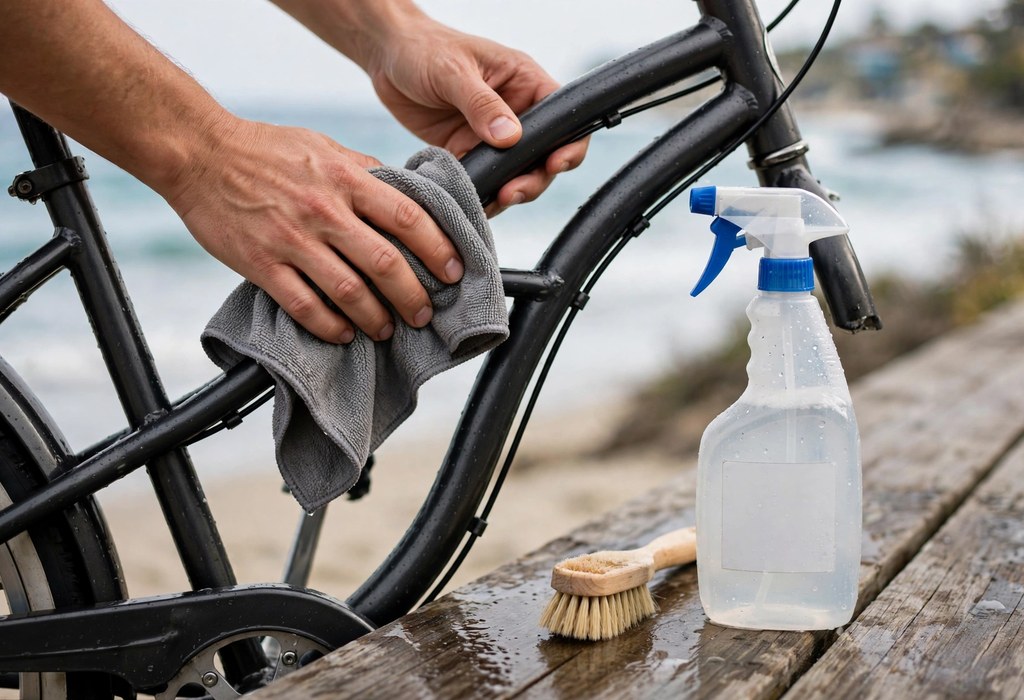
Salt air rust starts fast, so rinse salt from your cruiser after every coastal ride. Apply a protective barrier to bare metal, lubricate the chain, and store the bike indoors. Follow this simple routine consistently, and salt air loses its chance to start corrosion early. Many riders choose a classic beach cruiser bike for relaxed coastal paths, boardwalks, and beachfront neighborhoods.
Salt mist settles invisibly on frames, spokes, bolts, and chains during even short seaside rides. Humidity then holds that salty film against metal, so corrosion starts quietly between rides. Consistent cleaning, lubrication, and smart storage therefore keep your cruiser smooth, quiet, and rust free.
Why Salt Air Causes Rust So Quickly
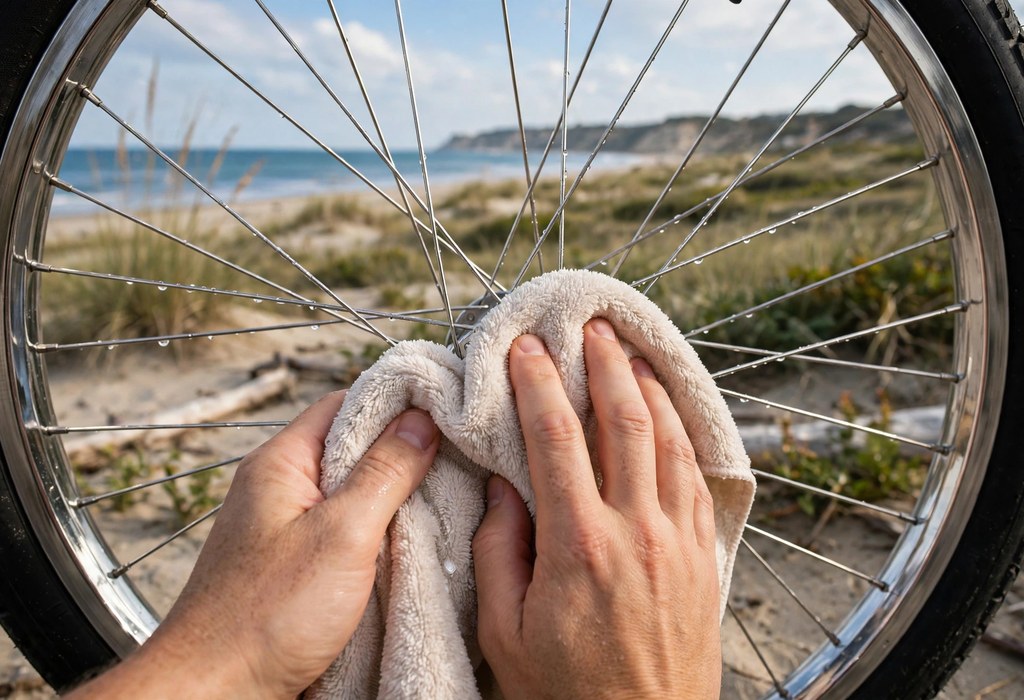
Ocean breezes also carry tiny salt particles onto every exposed surface, including hidden joints and fasteners. Moisture also clings to that salty layer, and the combination accelerates corrosion on steel frames and components. Chrome fenders, steel spokes, chain links, and bolt heads show damage first because coatings wear thin there.
Scratches, chips, and sand abrasion expose fresh metal, consequently giving salt a direct path underneath protective coatings. Night fog and morning dew also refresh that salty film between rides. Inspect your cruiser closely after coastal rides, and also catch early orange spots before they spread deeper.
Salt Air Rust Rinse And Dry After Every Coastal Ride
Start each post-ride cleanup with a gentle rinse using fresh water at low pressure. Direct the stream downward, and avoid forcing water into hubs, bottom brackets, and headset bearings. Wash the frame, fenders, and rims with mild soap, then rinse away every trace of soap residue.
- Fresh rinse: Rinse the entire bike gently after coastal rides to remove salt film quickly.
- Soft cloth: Wipe chrome, spokes, and bolts with a soft cloth to lift remaining moisture.
- Chain wipe: Wipe the chain carefully with a clean rag before you apply fresh lubricant.
- Hidden spots: Check under fenders, behind brackets, and around bolt heads for trapped salt.
Dry every surface completely with a clean microfiber towel, rather than letting the bike air dry outdoors. Pay special attention to chain links, spoke nipples, and cable guides, where moisture hides easily. Finish drying indoors whenever possible, and recheck the bike after a short wait for missed droplets.
Salt Air Rust Lubrication For Bare Metal
Lubrication also shields moving parts from moisture, reduces friction, and keeps coastal rides feeling smooth. Clean the chain first with a rag and degreaser, then apply bicycle chain lubricant drop by drop. Spin the pedals backward slowly, and wipe excess lubricant so sand cannot stick to the chain.
Brake pivots, cables, and derailleur joints also deserve light lubrication during coastal maintenance. Investigate common beach cruiser bike brake problems promptly when squeaking, dragging, or stiffness appears. Keep lubricant away from brake pads and rim surfaces, since contamination reduces stopping power sharply.
Additionally, coat painted frames, chrome parts, and exposed bolt heads with a thin protective wax layer. Reapply that barrier after washing, and refresh it more often during humid or stormy coastal weather. Avoid spraying protectants onto tires, grips, saddles, and braking surfaces for safety and control.
Store Your Cruiser Away From Salt Air
Indoor storage gives your cruiser the strongest defense, especially in garages, sheds, or spare rooms. Next, choose a dry, ventilated spot away from open doors, windows, and direct sea breezes. Hang the bike or use a stand, and keep tires off damp concrete floors whenever possible.
Cover the bike with a breathable cover when indoor space stays limited. Learn how to ride a beach cruiser bike on soft sand before tackling loose shoreline terrain. Check stored bikes weekly, wipe away condensation promptly, and refresh lubricant during long breaks.
Inspect, Touch Up, and Repair Early Damage
First, examine the frame, fork, spokes, chain, and fasteners closely during a quick weekly inspection. Look for orange dust, bubbling paint, rough patches, and stiff links signaling early corrosion. Tap suspicious areas gently, and listen for changes suggesting weakened metal underneath paint.
Treat Surface Rust Promptly
Sand light rust gently with fine abrasive pads, then clean the area thoroughly before applying touch-up paint. Seal repaired spots with wax afterward, and monitor them closely during subsequent coastal rides. Seek professional help promptly for deep pitting, cracked frames, or weakened structural components.
Maintain Tires, Cables, and Hardware
Replace frayed cables, rusted bolts, and worn brake pads promptly, since coastal corrosion weakens components gradually. Tighten loose fasteners carefully, and apply a tiny amount of protective product to exposed threads. Meanwhile, check tire sidewalls for cracks, cuts, and embedded sand after beach rides.
Build a Simple Coastal Maintenance Schedule
Weekly habits matter most, so rinse, dry, and inspect your cruiser after every beach outing. Monthly tasks include deeper cleaning, chain lubrication, wax renewal, and hardware checks. Seasonal checks cover cables, brakes, tires, bearings, and frame coatings before heavy riding periods.
Assemble a small coastal kit with rags, brushes, lubricant, wax, and spare fasteners. Store that kit near your bike, and use it consistently after rides rather than postponing maintenance. Finally, record inspection notes briefly, and track recurring rust spots across different seasons.
Frequently Asked Questions
Can salt air rust a beach cruiser quickly?
Yes, salt mist attacks bare metal rapidly, so rinse and dry your cruiser after coastal rides.
How often should I clean my cruiser near the coast?
Perform deeper cleaning monthly, and rinse the bike after every coastal ride.
Which lubricant works best in salty coastal conditions?
Use bicycle-specific wet lubricant in humid coastal conditions, and wipe excess lubricant carefully.
Should I leave my cruiser outside near the beach?
Prefer indoor storage whenever possible, and use a breathable cover only for short outdoor periods.
Does salt air damage chrome fenders and spokes?
Buff light rust gently with fine pads, then seal the cleaned area with protective wax.
Conclusion
Coastal air challenges every cruiser, but consistent care defeats corrosion season after season. Adopt the rinse, dry, lubricate, and store routine today, and enjoy smoother rides tomorrow. Share this guide with fellow coastal riders, and help more cruisers stay rust free longer.
Salt air rust attacks chains, spokes, and bolts after every coastal ride. Stop salt air rust early with rinsing, drying, and light lubrication habits.